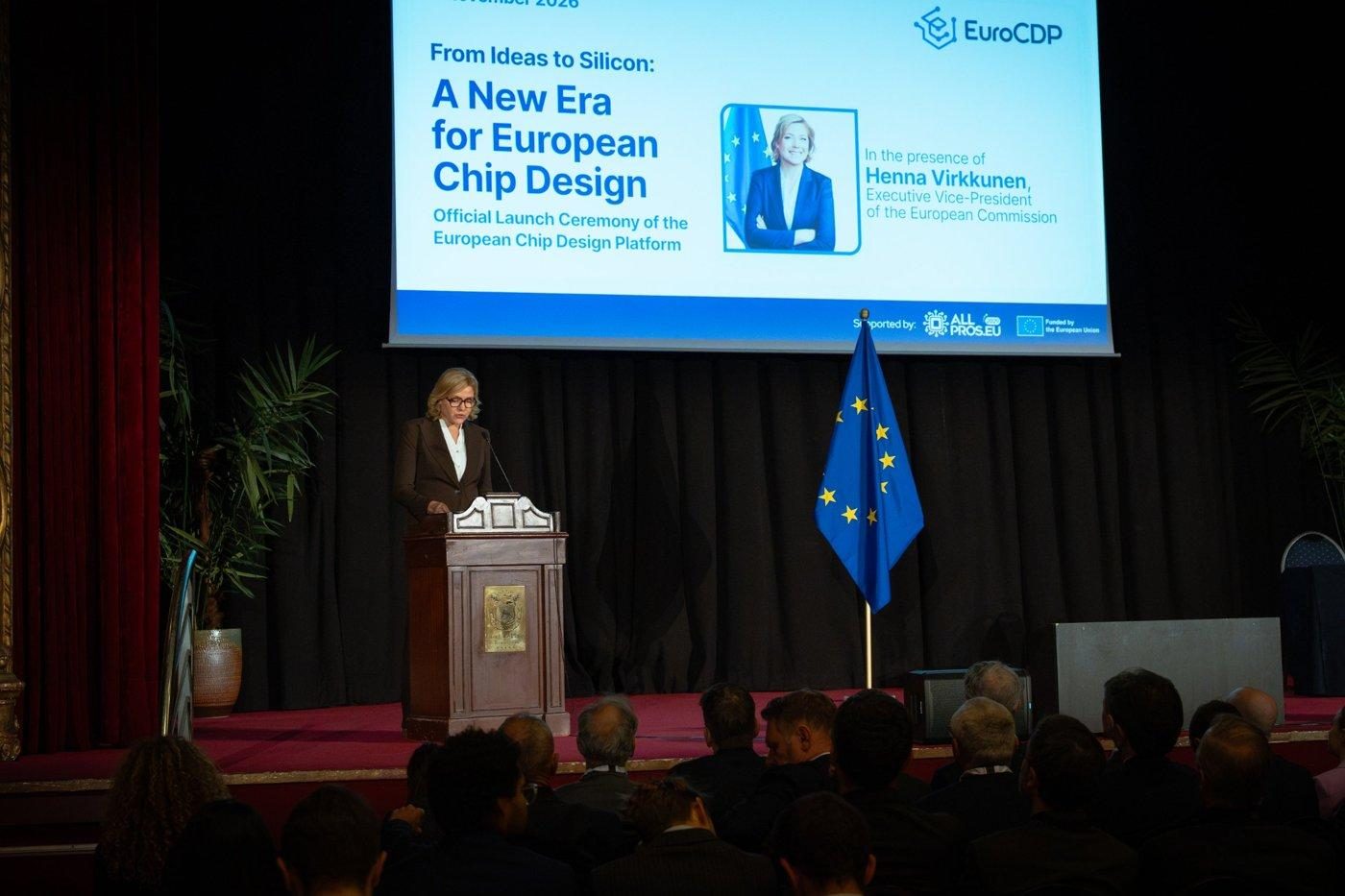
Nearly 300 participants, two days of stimulating discussions amongst key players of the chips ecosystem and two significant milestones: Euro Chips Design Platform launch & the European Fabless Semiconductor Association.
On 4 and 5 November 2026, the Industrial Alliance for Semiconductors met in Brussels for “The Technology Sovereignty Package in Practice: the European Union’s semiconductor angle”, organised in collaboration with the European Commission. Chip designers, manufacturers, policymakers, research centres and user industries shared the same room, and over two days a common thread emerged: Europe has the research and the ideas, and now needs the companies, customers and people to turn them into an industry.
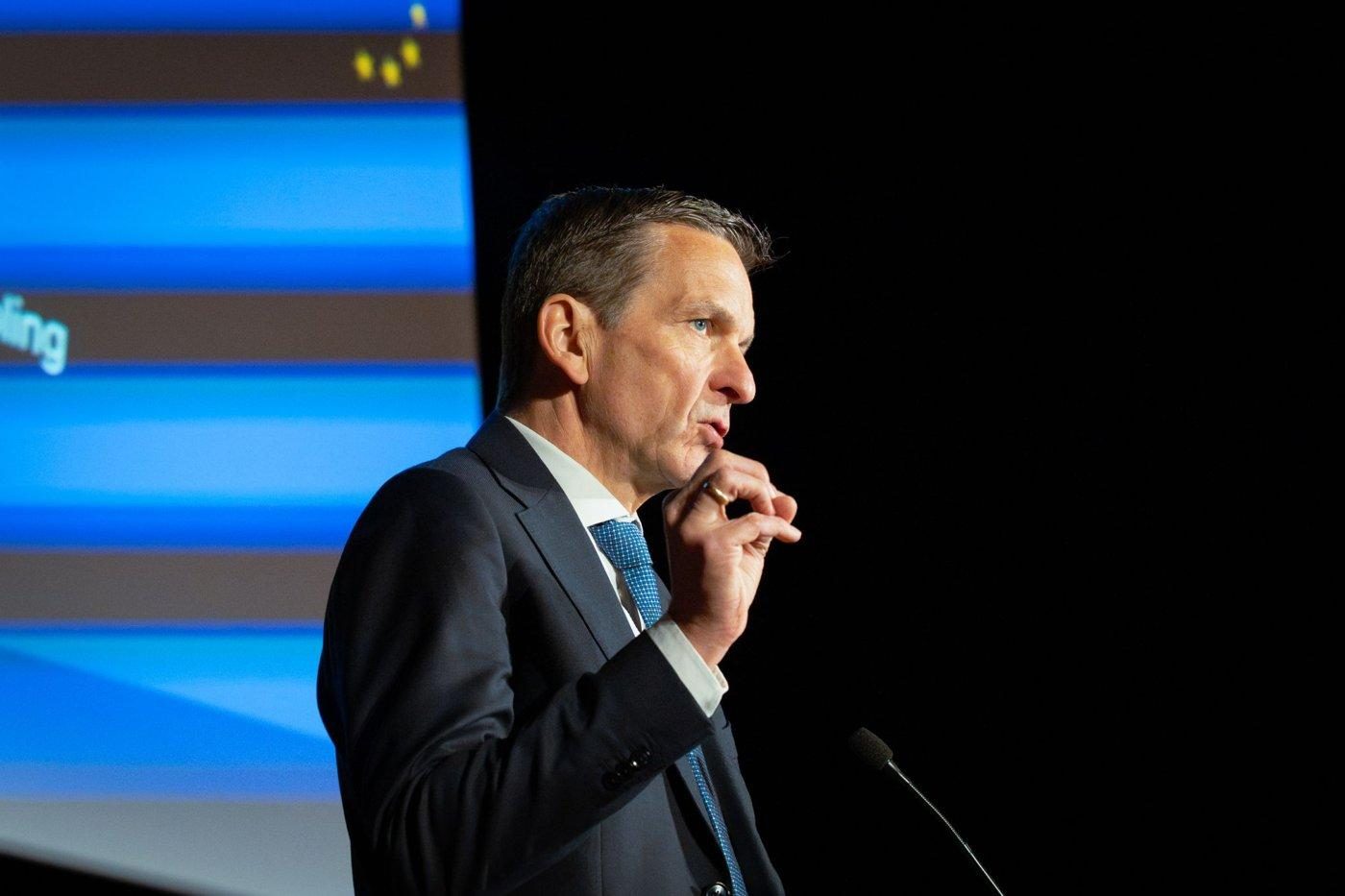
Kilian Gross, Director – Enabling & Emerging Technologies, DG CONNECT, European Commission.
Two launches, one message
The first day opened with two launches sharing one ambition: growing Europe’s place in chip design, a segment where a quarter of the world’s semiconductor start-ups are already European.
The first came from the institutions. Henna Virkkunen, Executive Vice-President of the European Commission, launched the European Chip Design Platform (EuroCDP), which will mobilise €525 million to give start-ups and SMEs access to design tools, IP, training and manufacturing capacity. Its first grant call, open until 12 January 2027, offers up to €16 million per company, national co-funding included.
“The European Design Platform gives our chips start-ups and SMEs the support they need to overcome the barriers to turn their innovative ideas into silicon. It shows how Europe is ready to act on its technological sovereignty goals, not only through policy and promises, but also by investing in our future.”
Henna Virkkunen, Executive Vice-President for Tech Sovereignty, Security and Democracy
Jari Kinaret, Executive Director of the Chips Joint Undertaking, joined Executive Vice-President Virkkunen on stage with Patrick Vandenameele, CEO of imec, and Romano Hoofman (imec), EuroCDP Coordinator.
Kinaret took part in the symbolic signing of the partnership agreements between EuroCDP and its suppliers, which marked the platform’s official start. The ceremony also announced a new partnership with the Design Enablement Teams and awards for the first start-ups admitted to the EuroCDP Accelerator.
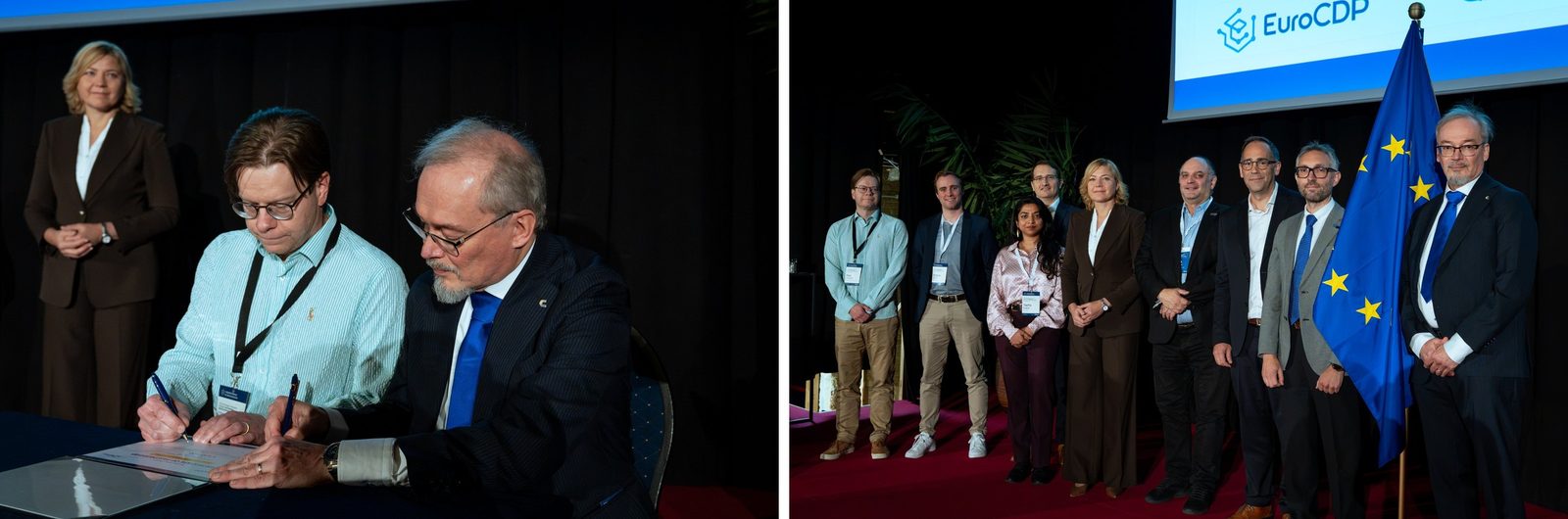
Jari Kinaret, Executive Director of the Chips Joint Undertaking, signs a EuroCDP certificate of partnership (left); Executive Vice-President Henna Virkkunen with the signatories (right).
The day’s second launch, the European Fabless Semiconductor Association, came from industry itself. It was founded by five European fabless chip companies, Axelera AI, Quside, Semidynamics, SiPearl and VSORA, with Paul de Bot, former head of TSMC’s European business, as its first President, to give Europe’s fabless companies a single voice with investors, customers and EU institutions. The goal is to bring together more than fifty of them within three years.
Together, the two launches cover tools, funding and representation. The panels that followed made clear that this is only half of the equation. European semiconductor start-ups receive a quarter of the funding of their US and Chinese peers, yet the point raised most often was demand: without European customers, even well-funded companies struggle to scale. One proposal came up on both days: when public money is spent and performance per euro is equivalent, buy European.
Vendors added their own condition. Providers of electronic design automation (EDA) software and semiconductor IP, the ready-made building blocks licensed for use in new chips, described their relationship as “co-opetition”: they compete in some areas but work together, since none of them can reach leading-edge performance alone. They called for interoperability and vendor-agnostic AI design flows. As several speakers put it, sovereignty should be the result of competitiveness, not its driver.
Then there is the question of who will design and build these chips. Forecasts presented at the event point to a gap of about 65,000 workers by 2030, as 30% of today’s workforce retires and graduates in relevant fields grow by just 1% a year. The leadership panel pointed to more engineers, more openness to talent from outside Europe and closer cooperation across the ecosystem.
On the second day, the customers took pole position. Physical AI, where models act in the real world rather than produce text, is bringing automotive, telecom, defence, cloud and consumer electronics companies to the table. Their requests were concrete: efficient and safe compute, hardware and software designed together, and less dependence on non-EU components.
The panel on semiconductor demand, moderated by Frank Bösenberg (Silicon Saxony), made the stakes concrete. Next-generation production and packaging capacity is still missing in Europe, noted Timo Tenhovuori, Head of Semiconductors at Nokia, and the open question is whether demand is strong enough to bring it here. Eric Eppe, Vice President at Bull Group, put a number on the dependency: around 30% of the floor plan of his company’s advanced chips relies on SerDes technology from outside Europe. Michel Sarlotte, Department Chief at Thales, pointed to a way forward: chiplets, built on European interface standards, as an entry point for start-ups and SMEs.
Pitching - One minute for SMEs to make their case
The second morning also introduced a novel, stimulating format: elevator pitches. Nine European start-ups and SMEs had one minute each to present their products and commercial offers to participants, many of them their potential customers. This lively pitch put into practice a point raised throughout the two days: European suppliers and European users need more occasions to meet.
“The start-up pitches we heard this morning were, in a way, a form of demand forum. […] User industries are very often not sufficiently aware of what is being developed and manufactured in Europe.”
Pierre Chastanet, Head of Unit – Microelectronics and Photonics, European Commission
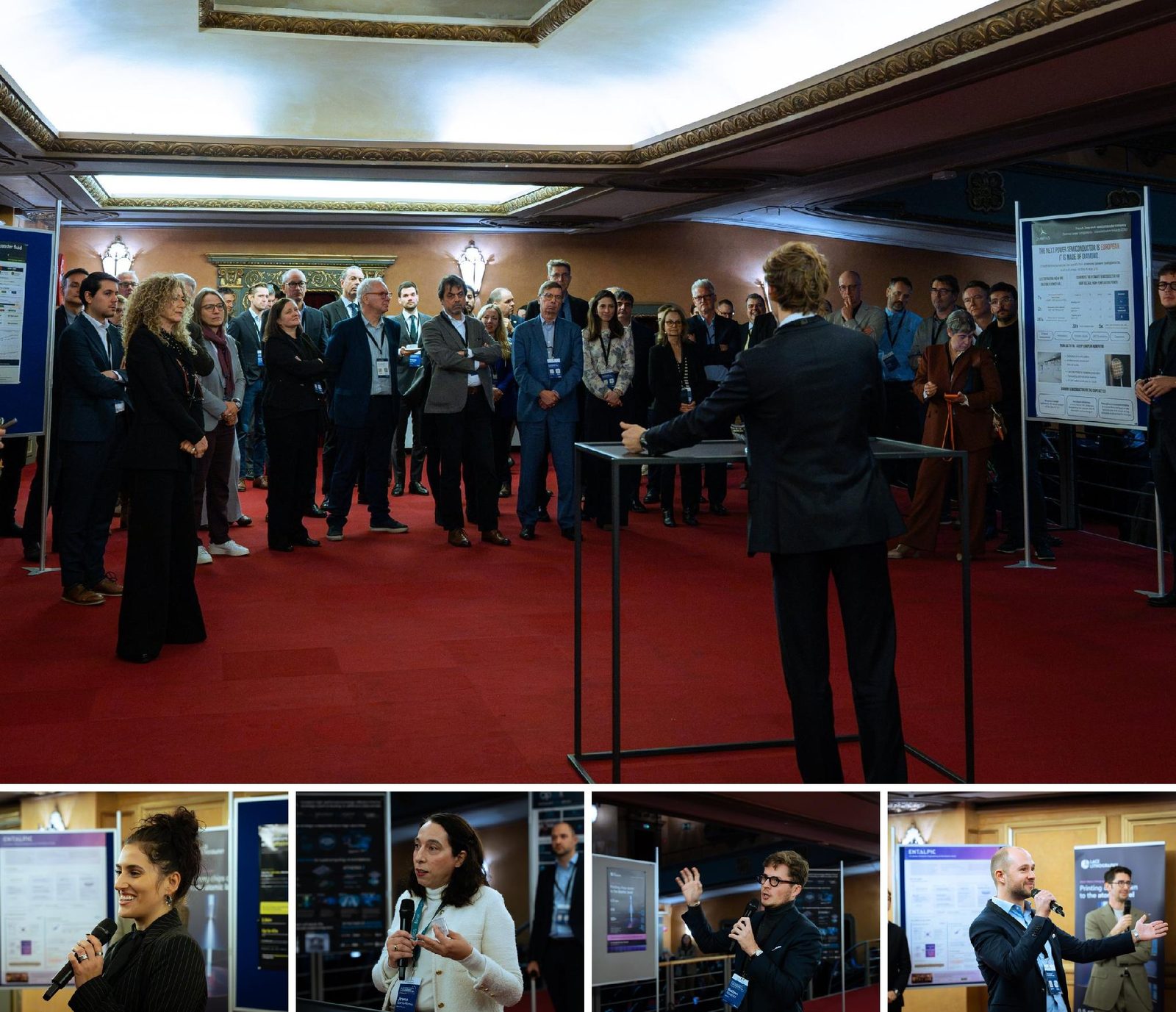
Elevator pitches by European start-ups and SMEs.
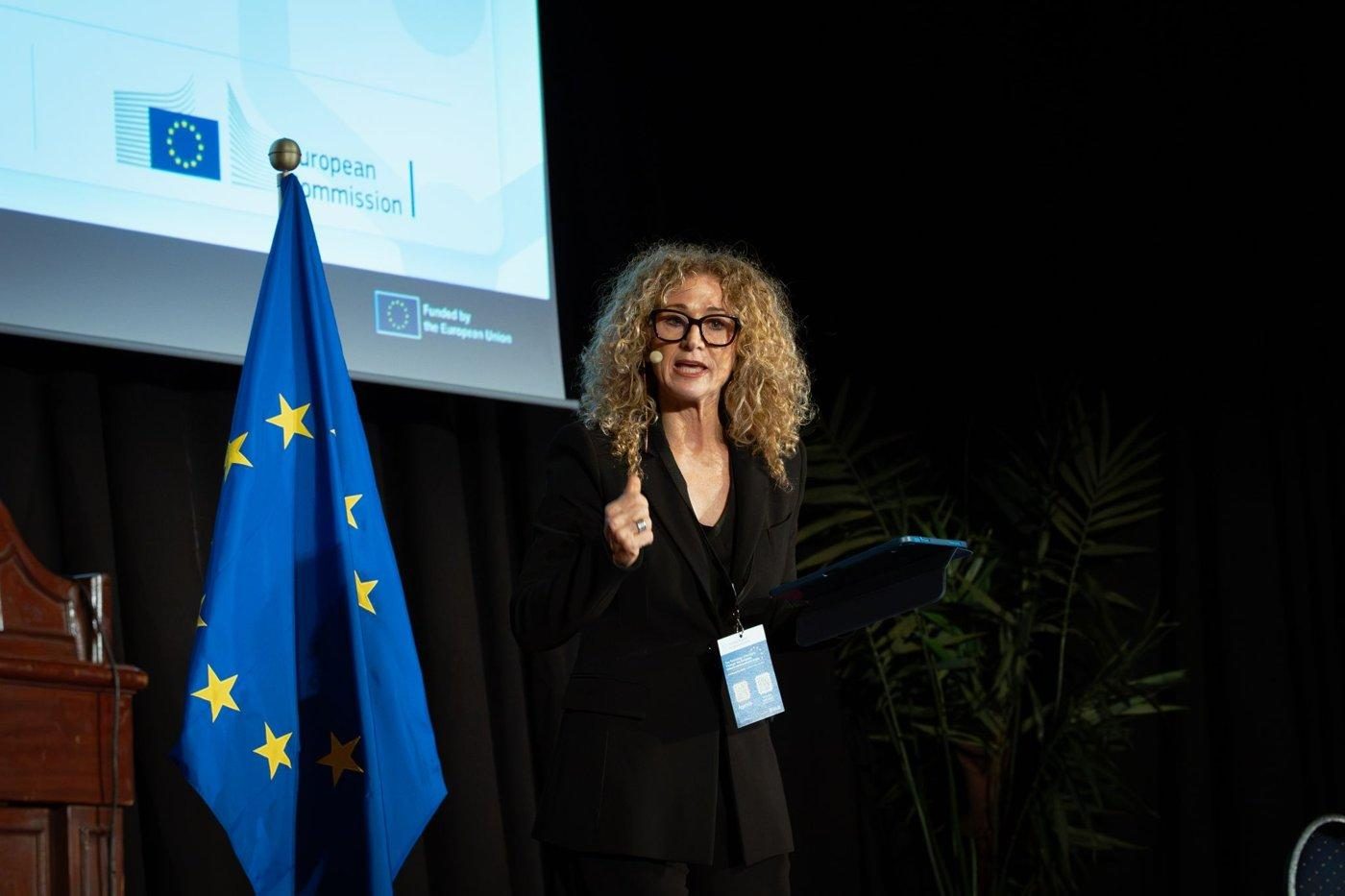
Silvana Muscella, CEO of Trust-IT, moderating on the main stage.
Our CEO’s Main Take-Away from the event
“Europe’s tech sovereignty will come from competitiveness, not the other way round. That means design-led and demand-driven. That was a constant message that was repeated over the two days: there is no sovereignty without chip design, and no industry without customers.
With Executive Vice-President Virkkunen launching the €500 million European Chip Design Platform, and user industries such as automotive, telecom and defense joining the debate, the focus moved from manufacturing alone to the whole ecosystem.
Speakers were also clear about the risks.
Market analysis presented at the event projects Europe’s share of the global value chain will slip to around 7% by 2030. Dependencies in materials, packaging and key IP remain high, and the talent gap could reach 65,000 people by 2030.
Over the next six months, Europe needs to deliver four things:
- Get EuroCDP grants flowing to start-ups quickly once the first call closes next 12th January 2027.
- Shape the Chips Act 2.0 around design and demand, using the new demand forum and demand accelerators so that public money buys European.
- Launch the planned equity facility with the EIB, Member States and private investors, to fund companies beyond seed stage.
- Turn the Alliance Working Groups’ recommendations on skills, supply-chain resilience, PFAS and automotive into concrete actions in collaboration with the European Semiconductor Board.”
Silvana Muscella, CEO of Trust-IT
Where Europe stands and what comes next
Market analysis brought the discussion back to the numbers. In a survey of 157 companies presented at the event, 97% expect their segment to grow, yet Europe’s share of global semiconductor value chain revenue is set to slip from 8.5% in 2025 to around 7% in 2030. The realistic priority is to defend strongholds in equipment and power, and to diversify the supply of materials.
The Alliance’s four Working Groups, on Skills, Supply Chain, PFAS and Automotive, are already working on these challenges, and shared with members the priorities they are developing for the European Semiconductor Board.
Their results will now travel further. Stefan Joeres, VP Business Development, Semiconductor Strategy & Strategic Projects at Robert Bosch and newly elected Chair of the Steering Committee, confirmed that the Committee will take part in every meeting of the European Semiconductor Board, starting with a first presentation in December.
Closing the event, Pierre Chastanet described an Alliance that is maturing and thanked ALLPROS for organising it. He also opened the next chapter, asking members for input to a deeper reform of the Alliance ahead of the new Chips Act, which foresees a demand forum and demand accelerators: the very tools many speakers had called for.
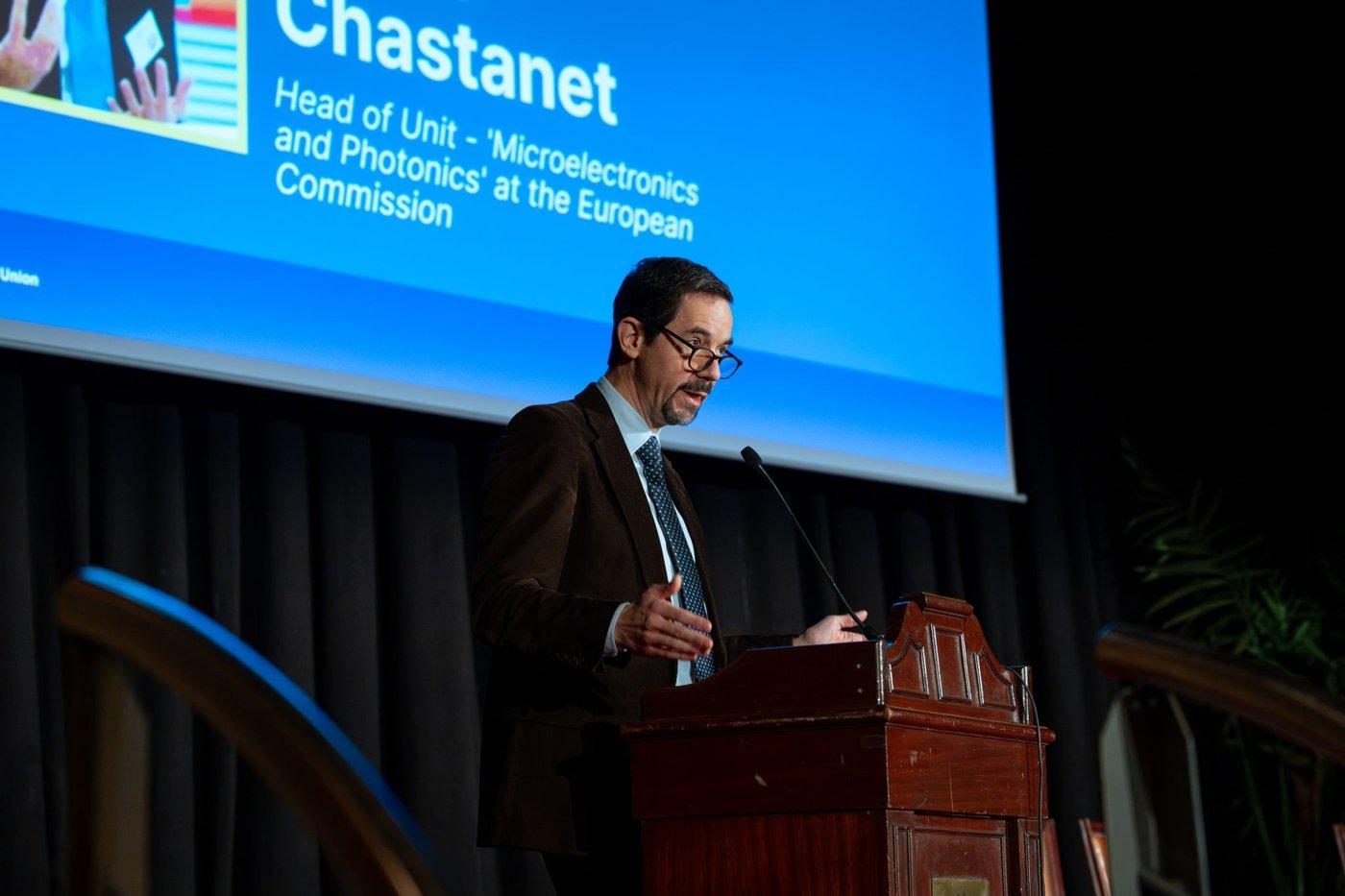
Pierre Chastanet, Head of Unit – Microelectronics and Photonics at the European Commission.
Finally, Pierre stressed the importance of giving the Working Groups’ work wider visibility. That is where ALLPROS 2029, coordinated by Trust-IT, comes in: turning the Alliance’s work into insights that inform policy and industry alike, so that the conversations started in Brussels carry on between plenaries. The community grows at every meeting, and just as much through the work that carries on between them.
On site, the event was run by the ALLPROS 2029 team, with Niccolò Zazzeri as Project Coordinator and Roberta Fabrizi as master of ceremonies.
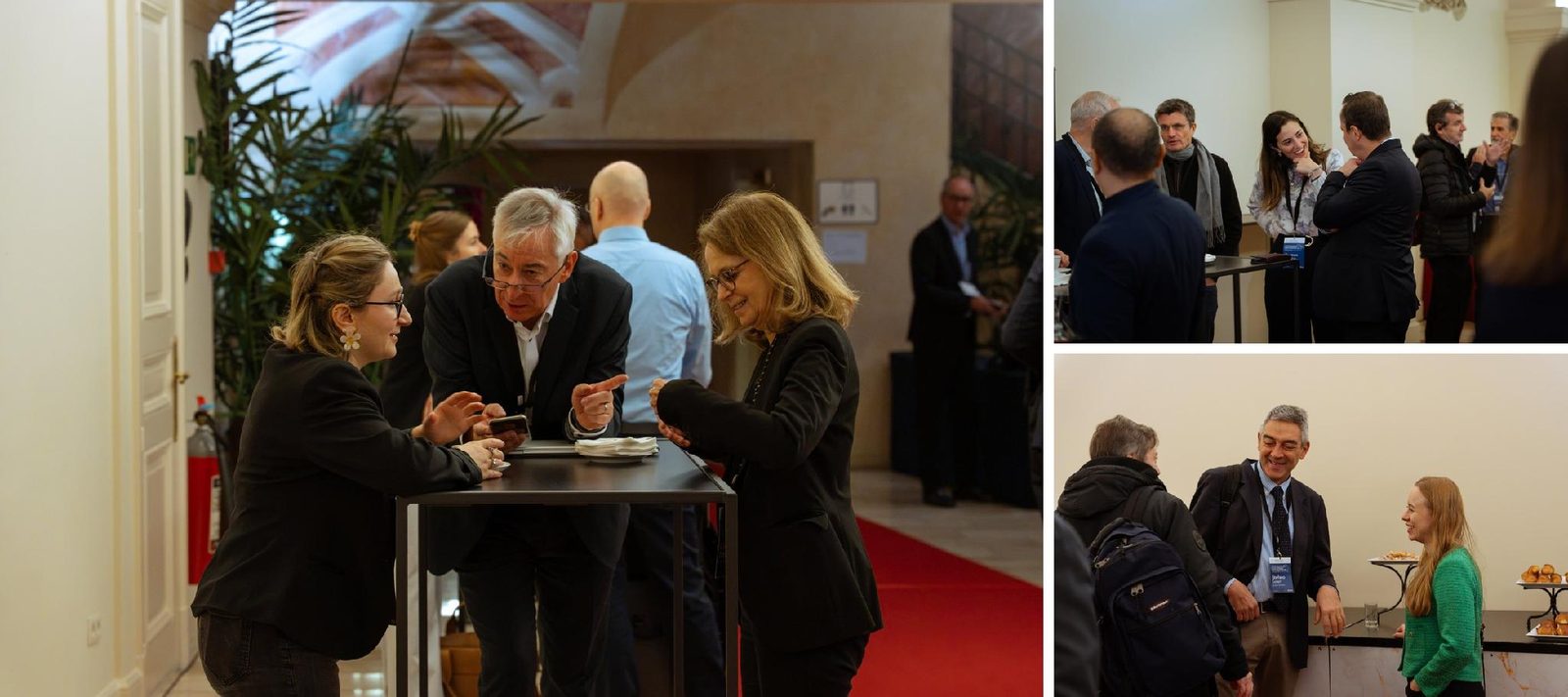
Networking between sessions at Le Plaza Hotel.
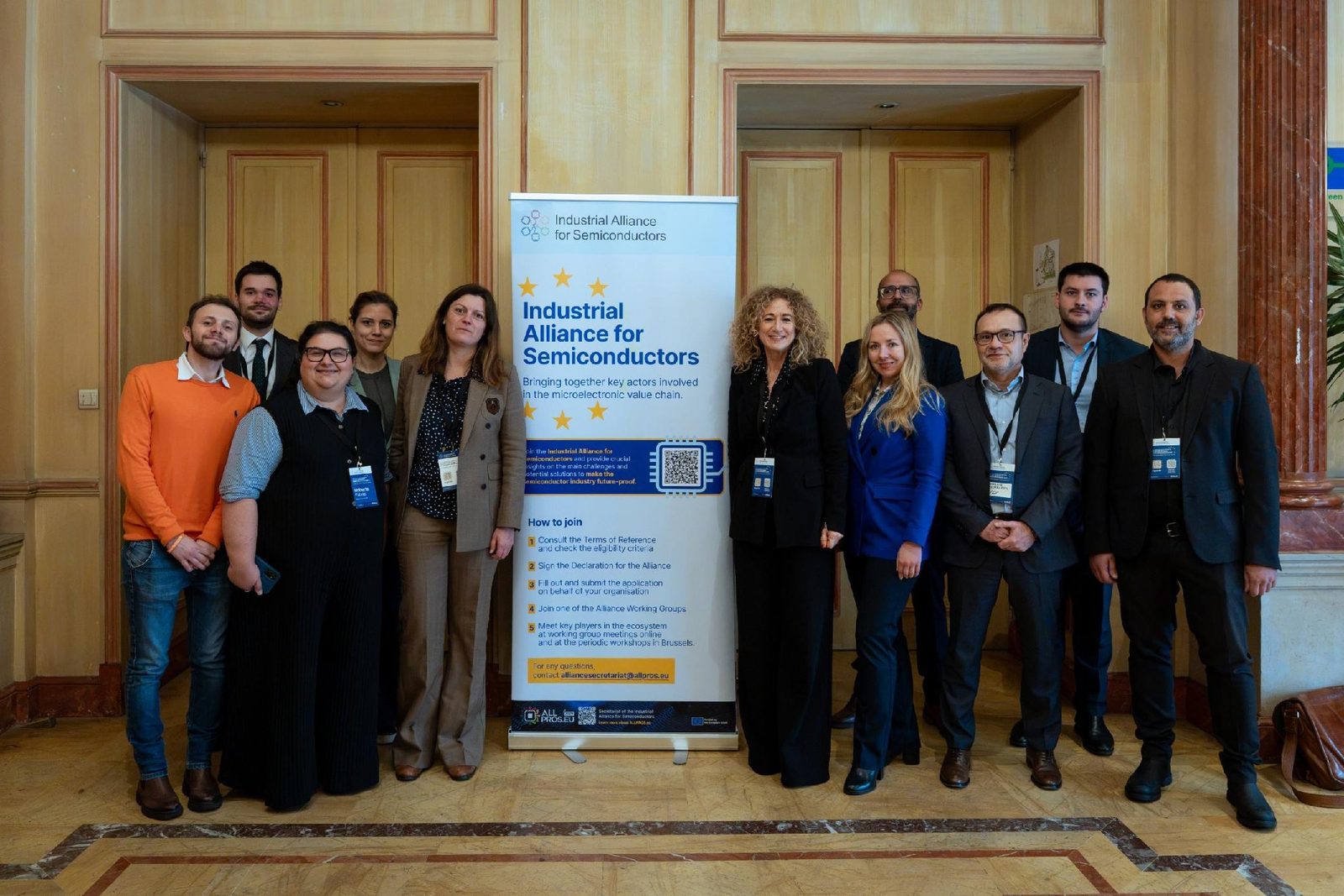
The ALLPROS 2029 consortium partners in Brussels.
Photos: Anastasija Grinuk for ALLPROS 2029.
Read the full event report on ALLPROS.eu.
About ALLPROS 2029
ALLPROS 2029 is the Secretariat of the Industrial Alliance for Semiconductors. The project is coordinated by Trust-IT Services, with IDC, DECISION, Yole Group and Silicon Saxony as partners, and has received funding from the European Union’s Digital Europe Programme under grant agreement No 101298820.
Funded by the European Union. Views and opinions expressed are however those of the author(s) only and do not necessarily reflect those of the European Union or the European Commission. Neither the European Union nor the granting authority can be held responsible for them.