Brussels stages ‘Nobel Prize for open source’ as Europe honours digital pioneers
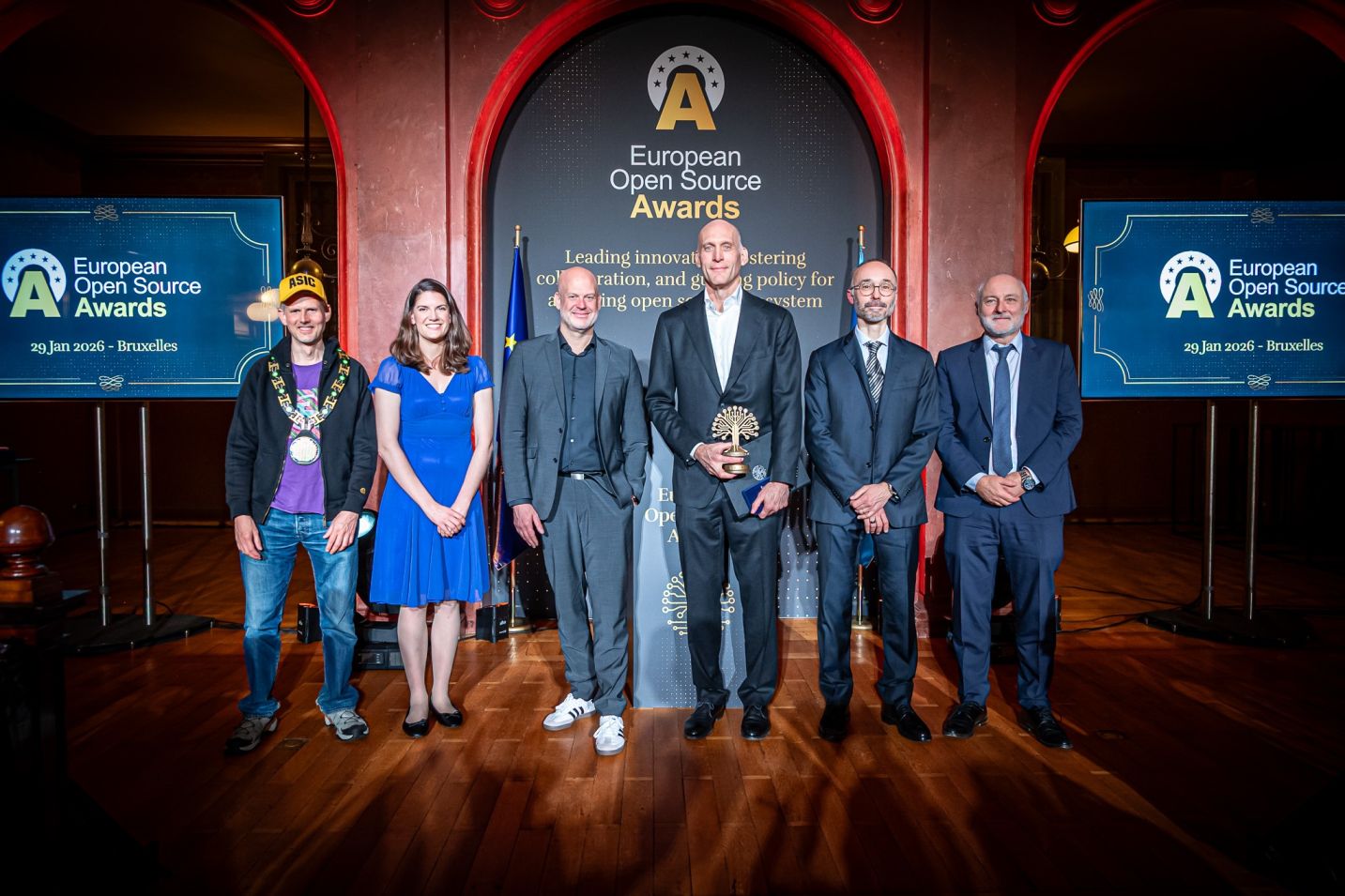
On 29 January the European Open Source Academy hosted the 2nd Annual European Open Source Awards, an event increasingly described as the ‘Nobel Prize for open source’. Held at the Solvay Library, the ceremony brought together developers, community leaders, policymakers and industry representatives to recognise those quietly building the digital foundations of modern life.
The upcoming European Open Digital Ecosystem Strategy - an initiative that will support EU ambitions to secure technological sovereignty showcases Europe’s commitment to support and implementation of European made and hosted solutions. Open source will be the linchpin of this effort, as it has already been responsible for the establishment and strengthening of Europe’s the digital infrastructure.
In a period when Europe’s digital future is closely tied to questions of sovereignty, security and resilience, the Awards offered both recognition and reflection — highlighting the central role open source plays in modern society and the people who sustain it.
A Setting Rooted in Collaboration
Commissioned in the early 20th century by Belgian chemist and industrialist Ernest Solvay, the Solvay Library famously hosted the Solvay Conferences, where Europe’s leading scientific minds debated the foundations of quantum mechanics. As a space historically dedicated to shared inquiry, where the visionaries like Marie Curie and Albert Einstein met with their peers, the library provided a fitting backdrop for celebrating a community equally grounded in collaboration and the open exchange of knowledge.
Giving Visibility to Open Source’s ‘Silent Builders’
Open source software underpins everything from cloud computing and artificial intelligence to hospitals, energy networks and public services. Yet the individuals and communities responsible for maintaining this infrastructure often remain largely unseen.
The European Open Source Awards aim to improve public recognition of these contributors at a time when governments across Europe are investing heavily in AI, cybersecurity, cloud computing and digital sovereignty. As reliance on digital infrastructure grows, so too does awareness that open technologies offer choice, control and long-term resilience in an environment still dominated by proprietary systems.
As Daniel Stenberg, President of the European Open Source Academy, noted during the ceremony, the Awards are a peer-led recognition of work that underpins modern digital life — giving overdue visibility to pioneers whose impact is felt globally, but rarely acknowledged publicly.
Celebrating Excellence Across the Ecosystem
The evening’s highest distinction, the Prize for Excellence in Open Source, was awarded to Greg Kroah-Hartman, one of the world’s most influential software engineers and a long-standing maintainer of the Linux operating system. Often described as the invisible backbone of the digital economy, Linux powers data centres, smartphones, telecommunications networks and critical infrastructure worldwide. Kroah-Hartman was also recognised for his leadership and mentorship within the global open source community.
Four Special Recognitions reflected the breadth of Europe’s open source ecosystem:
- Business and Impact: Frank Karlitschek, founder and CEO of Nextcloud, for building a leading European sovereign cloud platform that enables organisations to retain control over sensitive data.
- Advocacy and Awareness: Jenny Molloy, senior researcher at the University of Cambridge and Great Ormond Street Hospital, for championing open science and open technology in healthcare.
- Skills and Education: Matt Venn, founder of TinyTapeout, for lowering barriers to entry in semiconductor design through open hardware.
- Community Impact: Software Heritage, jointly represented by Roberto Di Cosmo and Stefano Zacchiroli, for preserving the world’s largest archive of open source software and safeguarding critical digital infrastructure for future generations.
A Peer-Led Model for Credible Recognition
A defining feature of the European Open Source Awards is their peer-led structure. Previous laureates form the European Open Source Academy, acting as custodians of the Awards and guiding the selection of future honourees. This model ensures recognition is driven by technical excellence, community impact and long-term contribution, rather than institutional or political agendas.
Held as part of EU Open Source Week, the ceremony attracted a diverse audience — from policymakers to developers — underscoring the growing recognition that open source has become strategic infrastructure for Europe.
Strengthening Europe’s Open Source Ecosystem
The success of the 2nd Annual European Open Source Awards reflects the collective effort required to sustain Europe’s open source ecosystem. Initiatives of this kind depend not only on visionary contributors and technical leadership, but also on the careful coordination and community engagement that allow open collaboration to thrive.
At Trust-IT, we recognise the importance of supporting initiatives that strengthen Europe’s digital commons, connect communities across research, industry and policy, and amplify expert voices. The Awards offer a compelling example of how thoughtful collaboration can elevate both people and ideas — and why open source remains central to Europe’s digital future.
The European Open Source Awards are held annually in Brussels and form part of a wider effort to strengthen Europe’s open source ecosystem, foster skills development, and support digital sovereignty across industry, government and research.
Discover more about the European Open Source Academy on their website