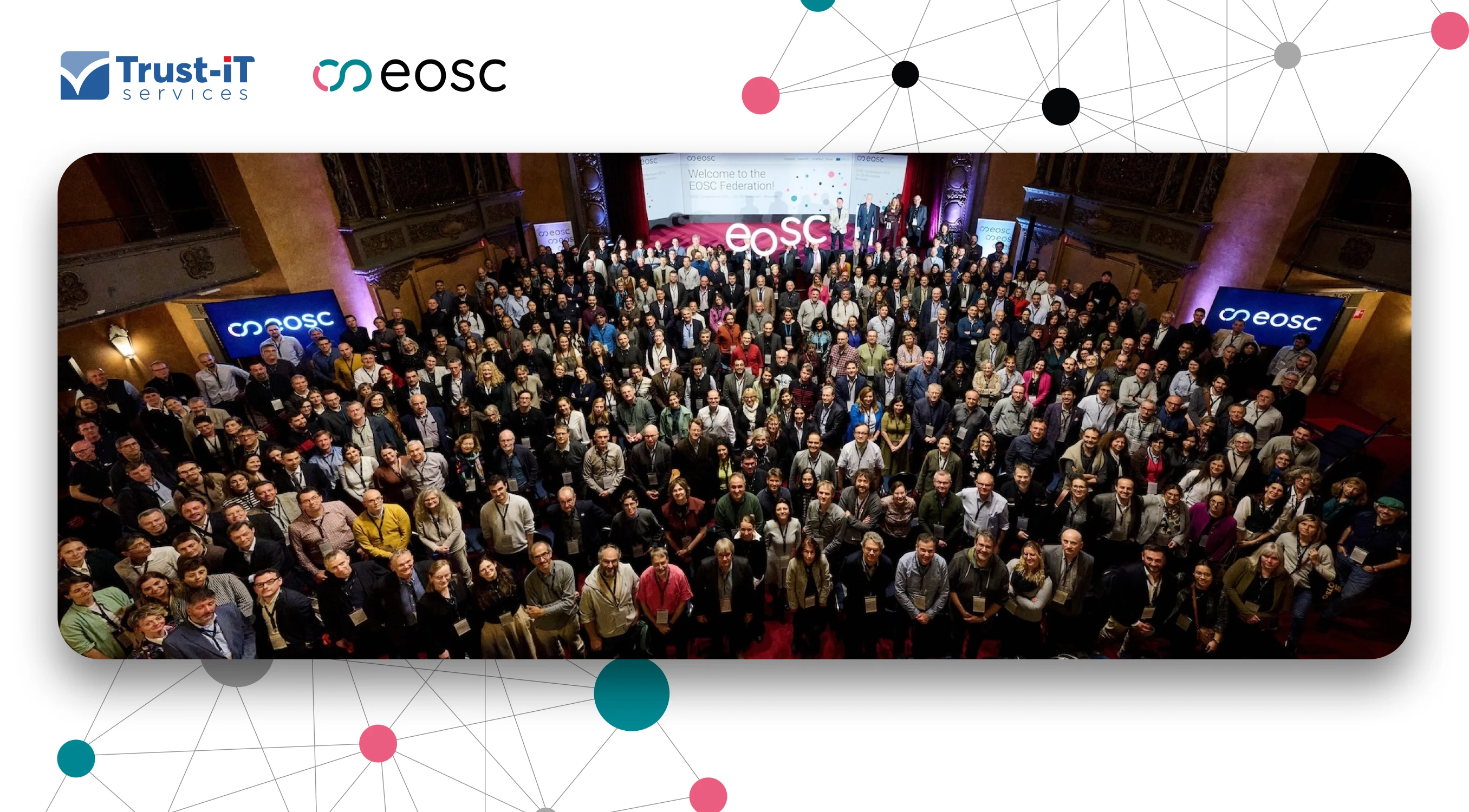
The EOSC Symposium 2025 in Brussels marked another important moment for Europe's Open Science community, highlighting the progress made and the impact of the EOSC Federation, which can become the backbone of Europe's digital research and innovation ecosystem.
With 500 participants from 36 countries, the event attracted representatives from all corners of the EOSC community. This year's Symposium was organised under the remit of the EC-funded EOSC Gravity project, where Trust-IT acts as the leader of engagement and dissemination activities in the project.
Working side by side with the EOSC Association, CSC and the EOSC Gravity consortium, Trust-IT helped to transform months of planning into a coherent, polished event that reflected the importance of the EOSC Federation and the energy of its evolving community.
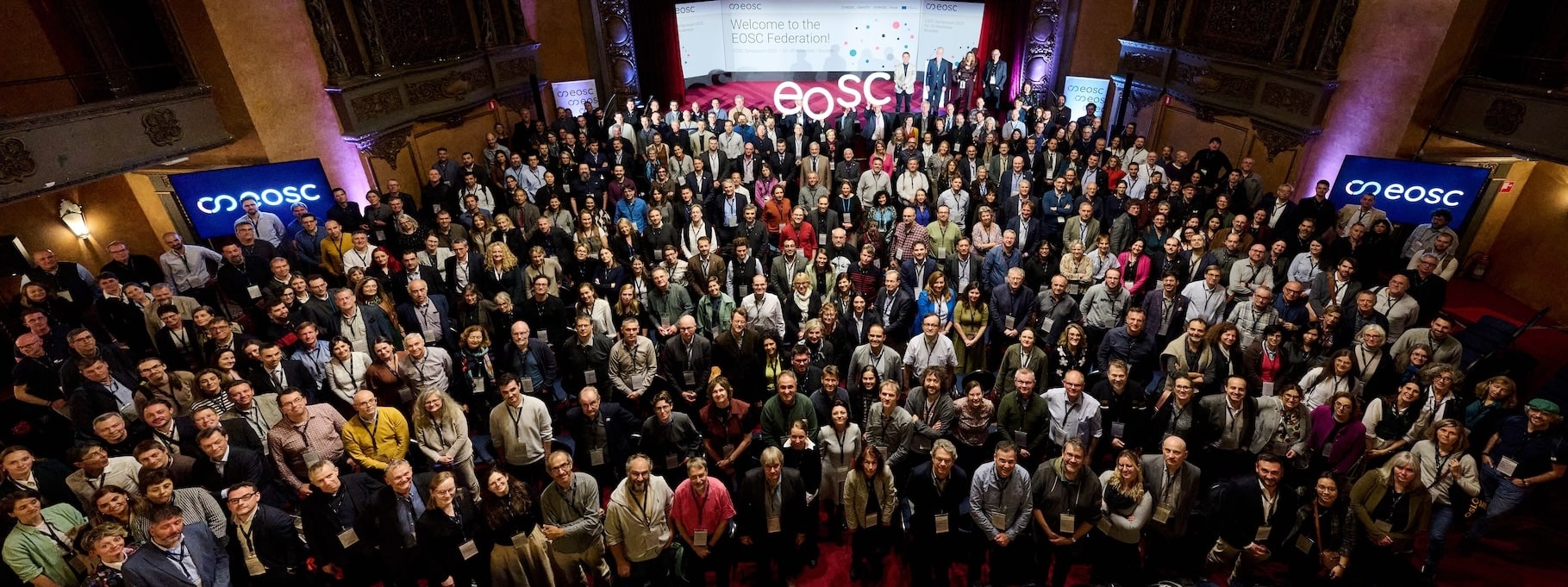
EOSC Symposium 2025, Brussels
Setting the Tone: Messages of Unity and Acceleration
The opening session set a clear direction for the years ahead.
Marc Lemaître, Director-General for Research and Innovation at the European Commission, emphasised the collective responsibility driving Europe's digital research ambitions. His call to maintain momentum and strengthen the EOSC Federation as a cornerstone of the continent’s scientific and innovation landscape resonated strongly with the audience.
Robbert Dijkgraaf, President-elect of the International Science Council, complemented this message with a global perspective. He highlighted the crucial role of international scientific cooperation and Europe's responsibility in safeguarding and advancing global data infrastructure. By positioning scientific collaboration as a catalyst for wider societal and economic progress, he underscored the significance of EOSC in addressing major challenges.
Demonstrating EOSC in Action: Researcher Journeys and Federation Capabilities
A highlight of the first day was the live demonstration of the EOSC Federation's scientific use cases. Coordinators from CERN, Galaxy Europe, and BBMRI-ERIC guided the audience through real researcher journeys, illustrating how FAIR data, interoperable services, AI tools, and federated access are transforming workflows across disciplines – from particle physics and climate science to medical diagnostics. These demonstrations provided a tangible glimpse into how EOSC can accelerate discovery, support reproducibility and encourage cross-domain collaboration.
The celebratory signing of the Memorandum of Understanding between the first wave of EOSC Nodes and the EOSC Association marked another key moment. This formalised the commitment of national and thematic Nodes across Europe to work together within the Federation. Additional signing ceremonies on the following day reflected the growing engagement of infrastructures and countries joining the shared effort to advance Open Science.
Governance, Sustainability and Community Innovation
The second day of the Symposium shifted focus to governance models, data sovereignty and the long-term sustainability of the EOSC Federation.
Enrica Porcari, incoming CIO at CERN, delivered a powerful keynote highlighting the need for openness, resilience and collective investment in scientific knowledge. Her statement that "EOSC is all of us" captured the spirit of the event and echoed throughout the discussions that followed.
The programme also showcased the breadth of innovation emerging from the community. Lightning talks and demonstrations presented domain-specific tools, cross-cutting AI services and new approaches to interoperability – illustrating the practical benefits of a truly connected European research environment.
A Global Perspective on Data Resilience
The final day centred on the international context of Open Science and the increasingly urgent need for global data resilience. Shelley Stall of AGU delivered an impassioned keynote calling for worldwide cooperation to protect scientific data in an era marked by political and economic uncertainty. Her message reinforced both the relevance of EOSC and the shared responsibility of research communities around the world.
As the conversations progressed – from national strategies to researcher engagement and developing the skills of the future – one theme was unmistakable: the pace of change is accelerating. Several speakers jokingly remarked that discussions evolved so rapidly that ideas presented in the morning already felt outdated by the afternoon, reflecting a dynamic and fast-moving ecosystem.
A Shared Achievement and a Clear Path Forward
With new Nodes joining the Federation, renewed political commitment and a community more engaged than ever, the road ahead for EOSC is full of potential. Trust-IT remains committed to supporting this progress through high-quality communications, coordination and operational expertise – helping to shape the future of Open Science in Europe.
Brussels was a milestone, but the journey continues. And Trust-IT is proud to play its part.