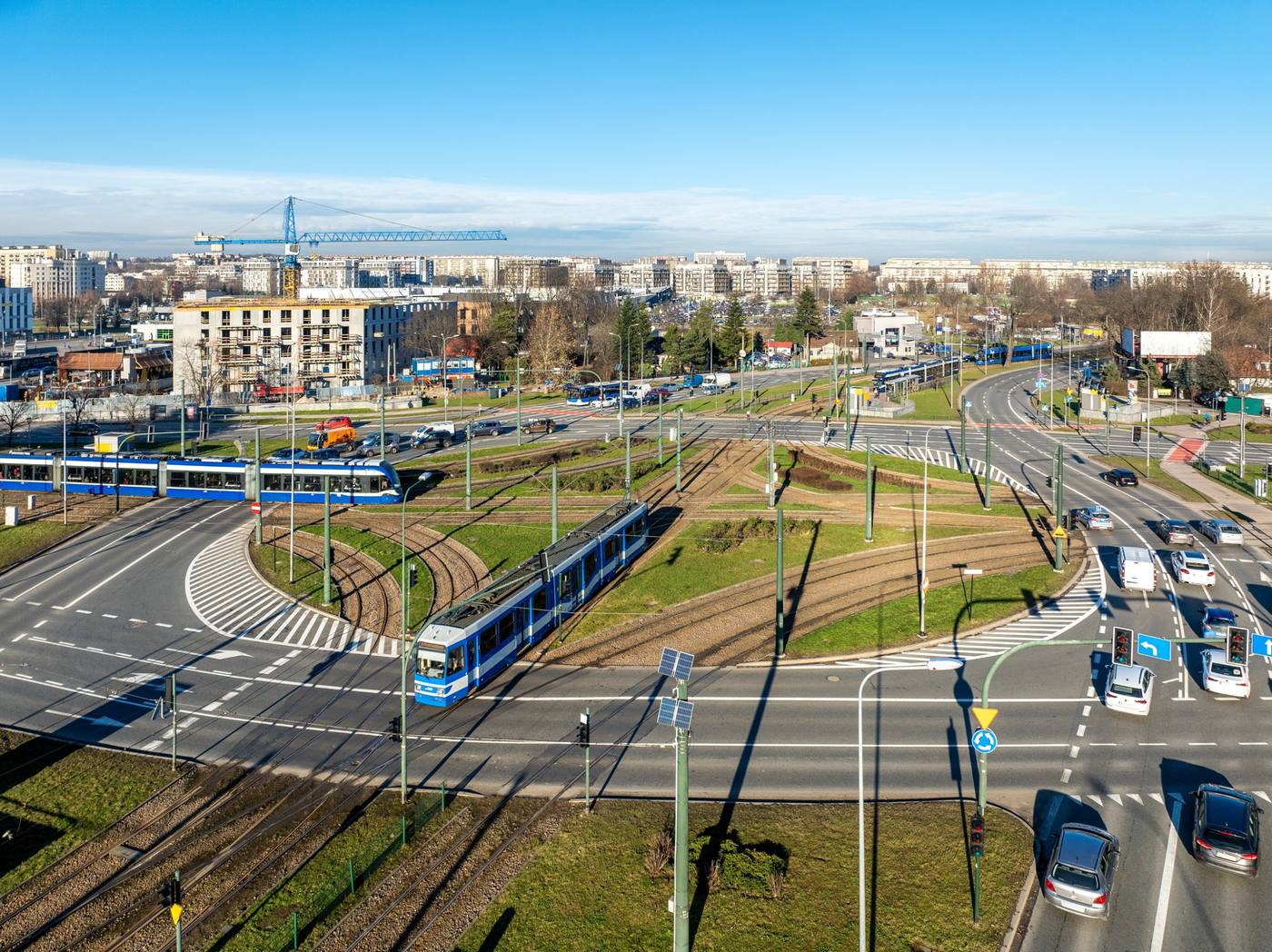
On 26 November, the United Nations marks World Sustainable Transport Day. The day is an occasion to reflect on the role of transport in achieving climate objectives, improving road safety and ensuring more equitable access to services. These issues matter most in cities, where increasingly complex mobility patterns require public authorities to have better tools for understanding transport dynamics and addressing infrastructure challenges.
Artificial intelligence (AI) can help. Analysing traffic flows, monitoring infrastructure conditions and observing road users' behaviour can provide valuable information for public policy. However, there is an important step between making a technology available and putting it into practice. The technology has to be tested under real-world conditions, its reliability verified, and its fit with the needs of the communities where it will be deployed assessed.
This is where Europe's Testing and Experimentation Facilities (TEFs) come in. These infrastructures bring together research, industrial innovation and the needs of end users. Among them, CitCom.ai focuses on testing AI-based solutions for smart and sustainable cities and communities.
Testing is only part of the challenge. The experience gained also needs to be accessible, comparable and transferable, so that it can inform the broader discussion on AI adoption across Europe. This is the aim of CoordinaTEF, a project that connects and promotes Europe's four sectoral AI TEFs. It encourages knowledge exchange between businesses, research communities, public authorities and policymakers.
Some of the latest success stories published by CoordinaTEF show how experimentation can translate into practical applications for urban mobility.
From experimentation to better infrastructure: experiences from across Europe
In Mechelen, Flanders, the city turned to CitCom.ai to make cycling safer and more comfortable. It launched an innovation challenge structured as a public innovation procurement, and the selected companies received funding to test solutions not yet on the market directly in the city. Belgian scale-up XenomatiX deployed XenoBike, a system combining LiDAR and cameras to assess the condition of cycling infrastructure. It mapped more than 50 kilometres of cycle paths, focusing on the "wijkroutes" connecting surrounding municipalities to the city. The resulting high-precision dataset helps the city identify priority areas for maintenance and upgrades. Find out how Mechelen opened its streets to innovation.
In Brussels, Brussels Mobility, the regional authority responsible for mobility policy, tested LiDAR technology at a busy multimodal intersection in Ixelles from January to June 2025. Working with SWARCO Belgium and Ouster, it monitored in real time how pedestrians, cyclists, cars, buses and trams interact, without relying on cameras or privacy-sensitive imagery. The data helped identify high-conflict zones and near-accident situations. These insights support targeted safety measures for vulnerable road users and the adaptation of traffic lights to actual road-user behaviour. The setup and use cases are described in detail in the Brussels Mobility case.
Belgian technology company Macq used CitCom.ai's Northern Supernode to test its technology at DOLL Living Lab in Albertslund, Denmark. The trial combined data from its QCAM camera system and its Qsense-Air environmental sensors. This approach, known as data fusion, builds a more complete picture of conditions on the road, from vehicle speeds and traffic flow to air quality. A central element of the trial was section monitoring, which measures a vehicle's average speed between two fixed points, as a tool to encourage safer driving and lower-emission roads. Explore the results of the Danish trial.
Sustainable transport is not only about road safety. It also involves planning the energy infrastructure needed for the transition. In Luxembourg, the city of Differdange worked with the Luxembourg Institute of Science and Technology (LIST) and its Smart City Hub, part of CitCom.ai. Together they co-designed a Local Digital Twin supporting the city's climate-neutrality goals. Alongside monitoring energy use in public buildings, the tool helps plan electric vehicle charging infrastructure by modelling energy demand and solar compensation scenarios. See how Differdange built its digital twin step by step.
Trust-IT and Europe's shared AI knowledge base
For testing activities to have a wider impact, their results cannot remain confined to individual projects. They need to become part of a shared body of knowledge and good practice.
This is where Trust-IT Services contributes to CoordinaTEF, which works across Europe's four TEFs: agrifoodTEF, AI-MATTERS, CitCom.ai and TEF-Health. Through communication, dissemination and knowledge-exchange activities, Trust-IT gives visibility and structure to the results emerging from these infrastructures. This work connects experiences from different sectors, identifies common areas of interest and makes the TEFs' expertise more accessible.
As a result, the achievements of the TEFs and their clients reach a wider audience of businesses, public authorities, innovators and policymakers, raising awareness of the testing services available across Europe.
A transition built on testing and knowledge-sharing
World Sustainable Transport Day is a reminder that safer, more efficient and more sustainable cities depend on more than technology. They also depend on testing solutions where they will be used and sharing what is learned.
The cases presented here show what this means in practice: creating the conditions for new technologies to be tested, assessed and progressively integrated into public services. Bringing these results together across sectors, as CoordinaTEF does, strengthens Europe's AI ecosystem and supports wider adoption.