The 15th of September marks the International Day of Democracy, a moment to reflect on democratic principles, evaluate the health of civic institutions, and reaffirm our collective commitment to human rights, freedom, and political equality. Established by the United Nations General Assembly in 2007, this day serves as a reminder that democracy is neither static nor guaranteed; it is a continuous, living process requiring daily care, active citizenship, and ongoing institutional renewal.
The State of Democracy Today
Democracy is in crisis. Across Europe and worldwide, public institutions face interconnected challenges: rising political polarisation, growing distrust in traditional governance, socio-economic inequality, and information environments dominated by noise, fragmentation, and even manipulation and astroturfing, whether foreign or domestic.
Democracy rests on a fundamental promise: that power belongs to the people, and that public decisions reflect the collective will of an informed and engaged citizenry. What that looks like in practice, of course, is variable and open to debate. Athenian democracy looked very different from the representative democracy that, in one form or another, has become the norm across most of the Western world: a change due in part to available technologies (online referenda and petitions were not possible back then) but also to different social customs and cultural contexts. In Ancient Greece, the agora was the nexus of social and commercial life, and democracy was built around that same public square. In today's world, more of our lives and interactions take place online, so it is only natural for democracy to evolve towards the digital realm.
Though change is always unsettling, this shift should also be seen as an opportunity: the current crisis of democracy may be exacerbated by digital factors, but it is not wholly caused by them. Unstable international relations and their consequences stem from external actors, while many domestic grievances relate to decisions taken by local, national, or European institutions. When citizens feel disconnected from decision-making, the democratic fabric begins to tear. New tools and approaches may help repair it, strengthen it, and perhaps even reshape it to better connect citizens to the decisions that affect their everyday lives.
The future of democracy is inseparable from the digital realm. Digital transformation has fundamentally reshaped how information is shared, how public opinion is formed, and how civic movements organise. When designed thoughtfully and ethically, digital tools can lower barriers to access, empower underrepresented communities, and enable transparent deliberation.
However, technology is a double-edged sword. Unregulated platforms, commercial engagement algorithms, and automated disinformation present severe threats to democratic debate. The defining challenge of our era is ensuring that digital spaces serve the public interest rather than commercial or authoritarian control.
Translating Values into Action
At Trust-IT Services, we believe technological innovation must always be anchored in public values and human-centred design. Through our role leading communication, dissemination, and results exploitation across European research initiatives, we strive to bridge the gap between high-level policy ideals and practical, real-world impact.
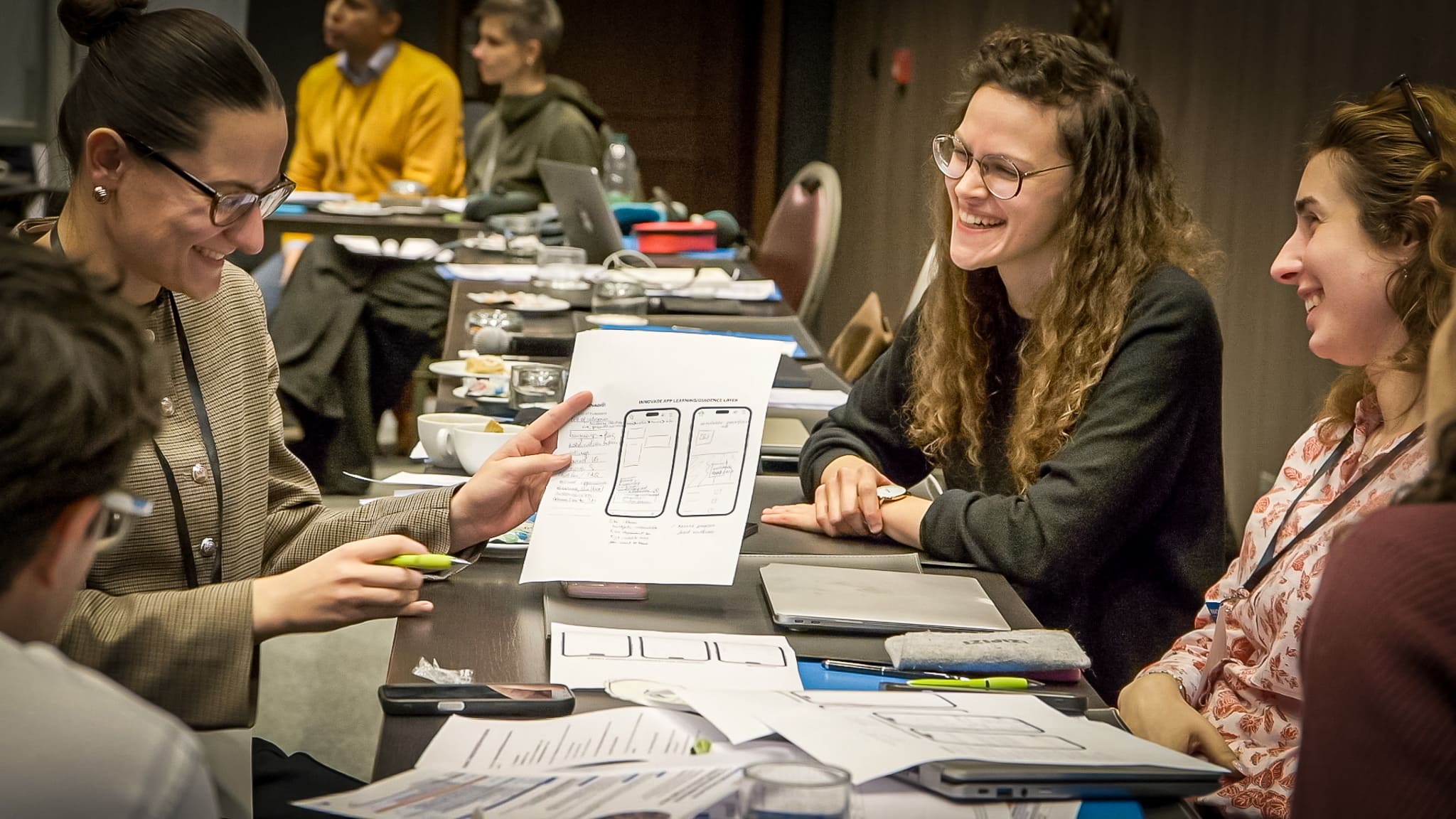
A topical example is our work on INNOVADE, a Horizon Europe project dedicated to analysing and supporting the transition to digital democracy. Rather than pursuing digitalisation for its own sake, INNOVADE investigates the legal, organisational, and technical conditions required for meaningful civic engagement. By combining citizen research with municipal pilots in Geel (Belgium), San Martín de la Vega (Spain), and Thessaloniki (Greece), the project demonstrates how open-source technology, robust data protection, and clear feedback loops can support genuine, inclusive participation.
Celebrating the International Day of Democracy is a call to action. Empowering citizens requires more than periodic voting: it demands accessible public spaces, continuous dialogue, and institutions that listen and respond. By bringing together researchers, policymakers, civic tech developers, and local communities, Trust-IT remains dedicated to advancing digital solutions that strengthen, protect, and revitalise democratic participation across Europe and beyond.