Sustainability of global food systems is a growing concern, particularly in sectors reliant on natural resources such as fisheries and aquaculture. While seafood represents one of the most widely traded food commodities globally, it remains among the most misunderstood by consumers. VeriFish is a project funded by the European Commission that is transforming this landscape by providing the tools and infrastructure necessary for transparent, verifiable sustainability communication, for consumers who seek clear, trustworthy information about the sustainability and nutritional value of the products they consume, by searching product species. Or for fishermen & aquaculture producers who want to share their story and log specific details of a catch species, fishing method, location and applicable certifications, and state their contribution and commitment to sustainable fishery.
The core of the VeriFish approach is its Indicator Framework, conceived as an “impartial” tool, based on data collected by scientists, researchers, and industry experts in Europe and around the world, organized into databases (FAO Global Record of Stocks and Fisheries (GRSF), EuroFIR’s FoodExplorer database, Fishsource, SeafoodWatch, to cite a few), and analyzed according to FAIR scientific practices. The VeriFish Indicator Framework is a reference matrix and brings together all the variables that should be taken into consideration when discussing a sustainable seafood supply chain: environmental variables ("What impact does fishing for shrimp with trawl nets have? What is the impact on the habitat of losing nets at sea?"), economic variables ("Does the country whose flag this vessel flies respect international labor standards?" #ILO), as well as nutritional variables ("Does this farm use organic feed?" "I'd like to replace meat with fish: how do I choose?").
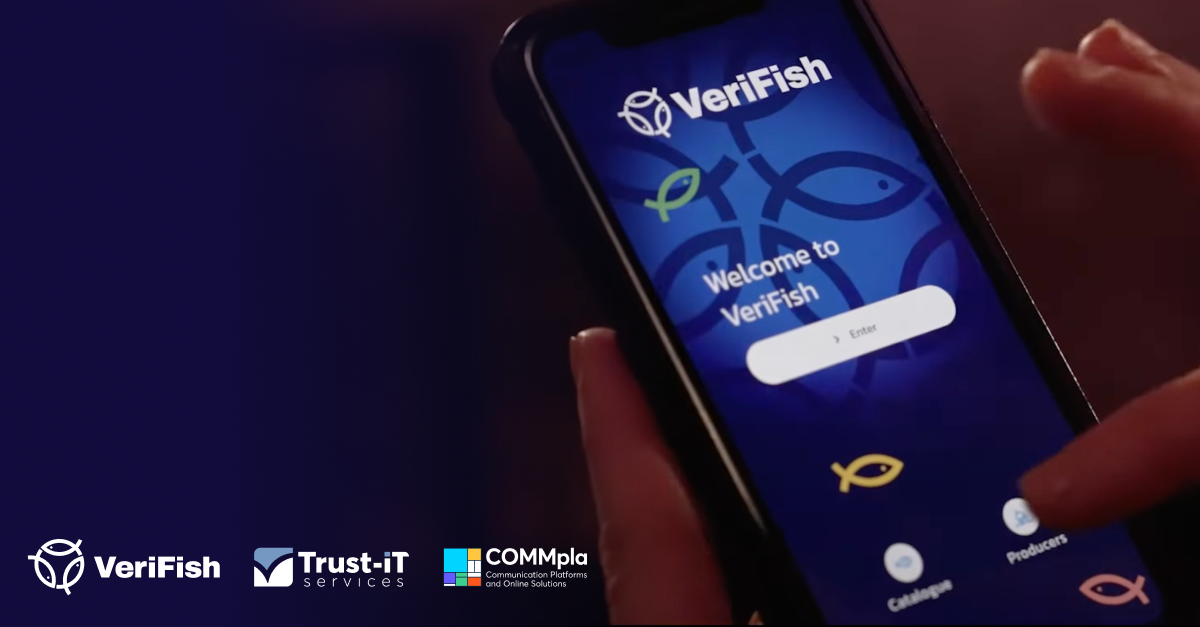
Within the VeriFish indicator framework, information about sustainability, provenance, and nutrition is available in one place. But how to demonstrate that this wealth of data, made available for the first time in its entirety, can be used to explain the complexity of sustainable fishing? The framework gives the ability to choose which questions to ask ourselves and find the answers. And the VeriFish Mobile Application is a key pilot tool, demonstrating the power of all these reliable data sources for communicating sustainable fishery and aquaculture relying on scientifically validated data.
Scan before you buy: Euronews documentary about the VeriFish web-app
The app is conceived to be used by consumers or producers.
A first use case is about consumers, looking to take informed seafood purchasing decisions. Upon scanning a QR code related to a product in a restaurant or at a fishmonger who is partnering with VeriFish, or by manually searching for a fish species, users are presented with detailed, verifiable data about biological, nutritional, socio-economic and information about the environmental impact of a species. In a second scenario, a fisherman uses the Mobile App to log specific details of a recent catch species, fishing method, location and applicable certifications and make them available to their customers via the app or turning the online factsheet into other type of marketing materials telling their approach to sustainable fishing.
The pilot VeriFish app is being updated with socio-economic and aquaculture indicators and will be accessible from early 2026.
If you are interested in getting a preview or showing your data as a producer, contact us at https://verifish.info/contact-us/