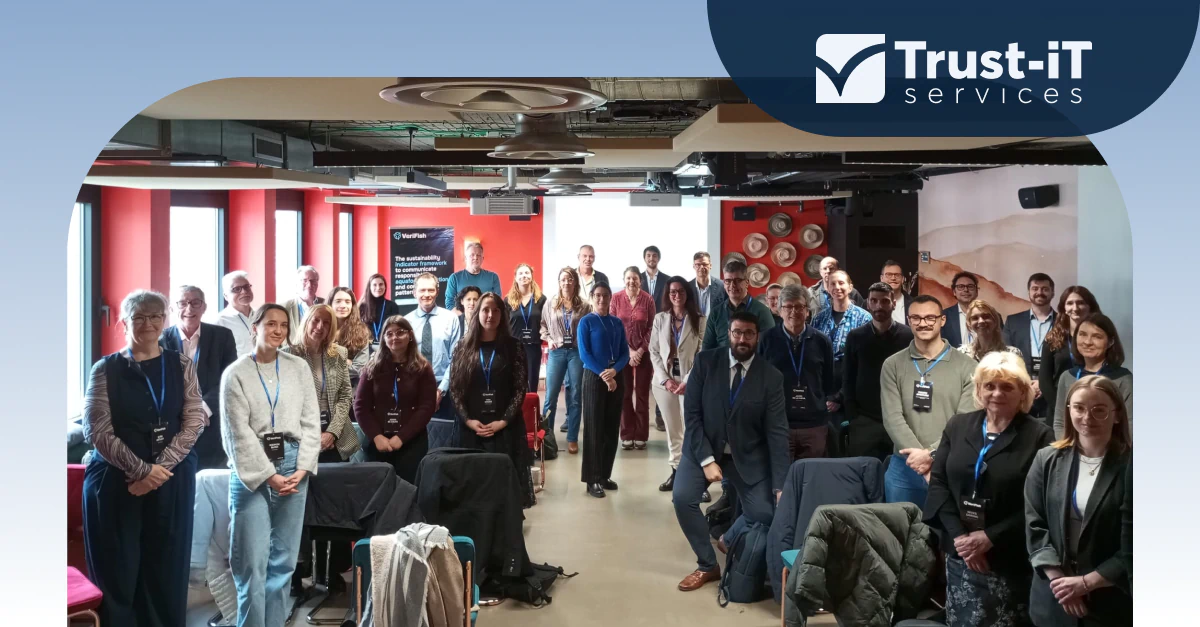
How can we ensure that the seafood on our plates is truly sustainable for both the planet and the people who produce it? On 10–11 March in Brussels, stakeholders from science, policy, industry, and civil society gathered for the VeriFish Final Event to explore this question.
The event marked the culmination of two years of collaboration to develop a framework for verifiable seafood sustainability indicators, aimed at bringing greater clarity and transparency to sustainability claims. By bringing together experts from across sectors and hosting joint sessions with the FishEUTrust project, VeriFish highlighted how seafood sustainability can move beyond simplified labels toward more transparent indicators.
A Foundation for Clearer Communication: The VeriFish CEN Workshop Agreement (CWA)
The event opened on 10 March with a dedicated session on the VeriFish CEN Workshop Agreement (CWA), a key project output designed to ensure lasting impact. Developed within the framework of the European Committee for Standardisation (CEN), the CWA provides Good Practice recommendations for communicating seafood sustainability indicators in a clear, harmonised, and trustworthy way across Europe.
Rather than creating a new certification scheme, the VeriFish CWA complements existing initiatives by helping producers, retailers, restaurants, NGOs, and communicators present sustainability information accurately and consistently. By promoting evidence-based messaging and credible claims, it aims to strengthen consumer trust and support more informed purchasing decisions.
The upcoming publication of the VeriFish CWA on CORDIS and Zenodo will help improve the communication of seafood sustainability, supporting greater transparency, consumer trust, and more sustainable seafood systems across Europe and beyond.
Rethinking Seafood Sustainability: Environmental, Nutritional and Social Dimensions
The VeriFish Final Event on 11 March opened with remarks from the European Commission, followed by introductory remarks from Sara Pittonet (Trust-IT Services, VeriFish Project Coordinator) and Nives Ogrinc (Jožef Stefan Institute, FishEUTrust Coordinator).
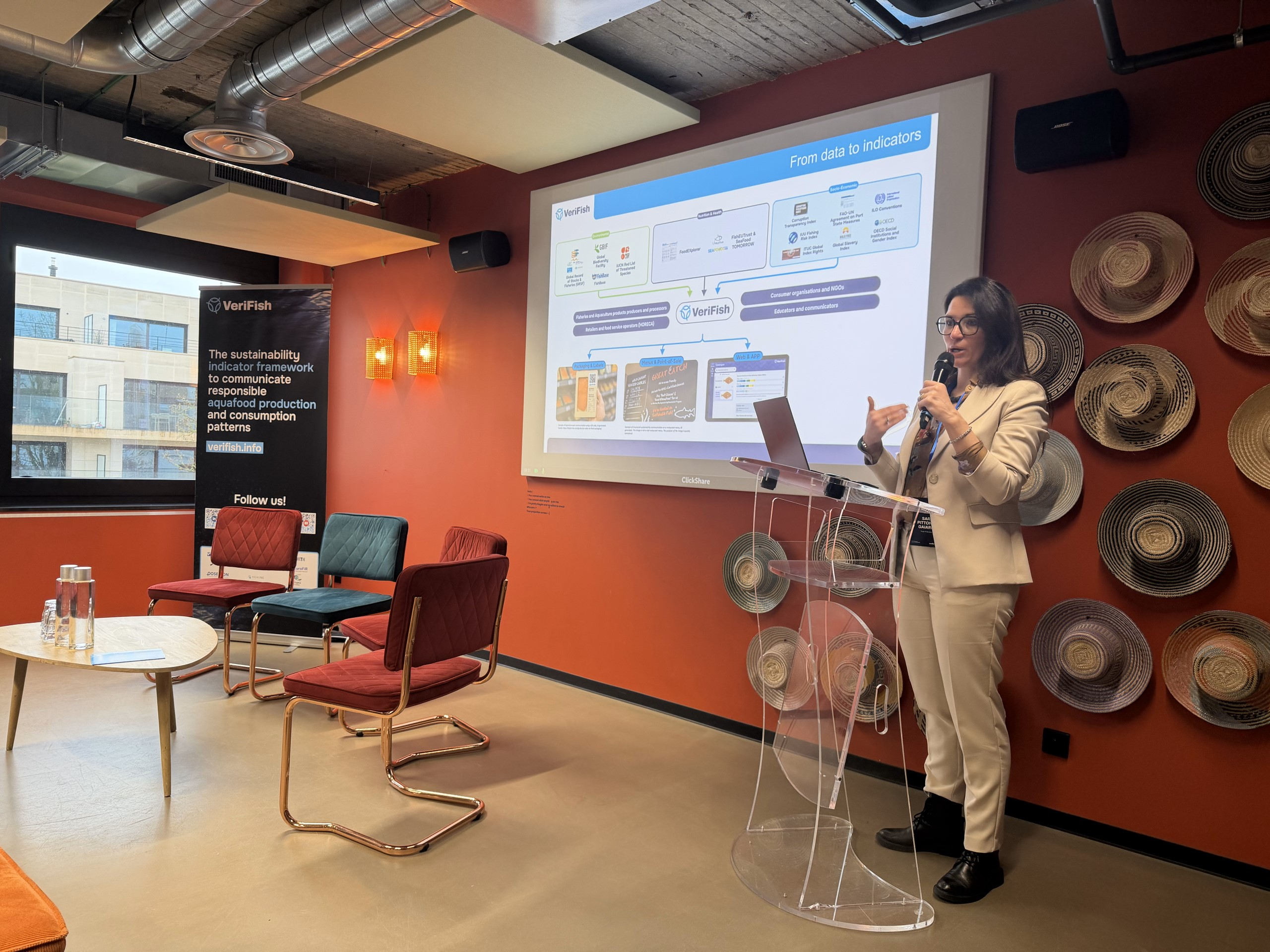
Sara Pittonet Gaiaring - Trust- It Services coordinator
The morning plenary sessions, organised in collaboration with FishEUTrust, were structured around three thematic panels addressing key dimensions of seafood sustainability:
Environmental sustainability of fisheries and aquaculture
- Introductory project pitches:
- Ixai Salvo Borda – Eurofish International Organisation
- Natalie Rizzo – DTU – Technical University of Denmark
- Moderator:
- Michelle Boonstra – Clupea Consultancy
- Panellists:
- Alessandro Manghisi – Aquaculture Stewardship Council (ASC)
- Anne Marie Cooper – ICES – International Council for the Exploration of the Sea
- Carlos Mendoza – Smartwater Planet
- Ixai Salvo Borda – Eurofish International Organisation
- Natalie Rizzo – DTU – Technical University of Denmark
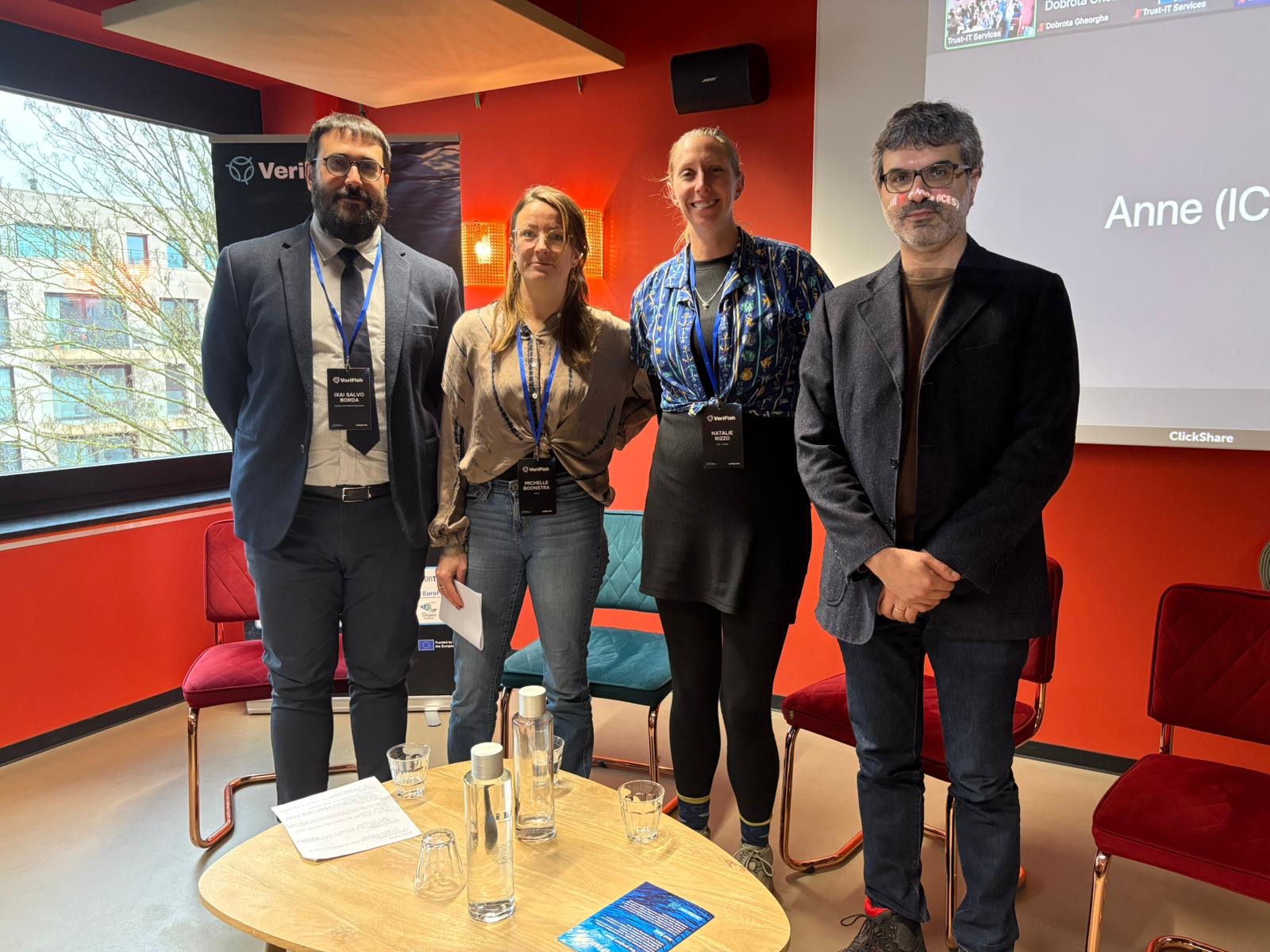
Speakers for the session: "Environmental sustainability of fisheries and aquaculture"
What seafood brings to our diets
- Introductory presentation:
- Siân Astley – EuroFIR AISBL
- Siân Astley – EuroFIR AISBL
- Chair:
- Paul Finglas – EuroFIR AISBL
- Panellists:
- Anton Ellenbroek – FAO Consultant
- Stefanos Cherouvis – Ecsite – European network of science centres and museums
- Narcisa Bandara – IPMA
- Siân Astley – EuroFIR AISBL
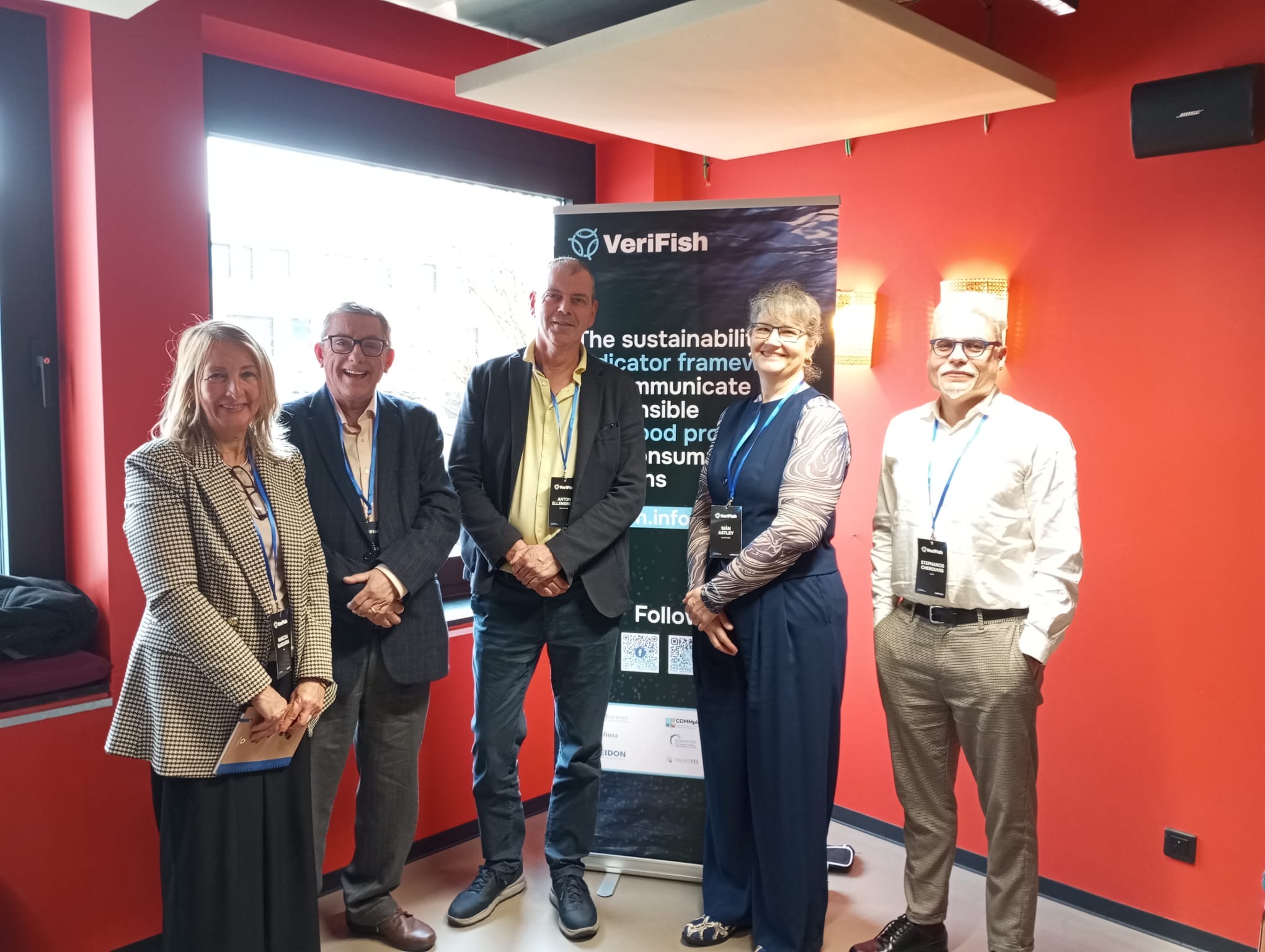
Speakers for the session: "What seafood brings to our diets"
Understanding the human side of seafood
- Introductory presentation:
- Tracy Murai – Poseidon Aquatic Resource Management Ltd
- Moderator:
- Graeme Macfadyen – Poseidon Aquatic Resource Management Ltd
- Panellists:
- Irene Kranendonk – Fish Tales
- Petter Olsen – Nofima
- Marine Cusa – Oceana
- Tracy Murai – Poseidon Aquatic Resource Management Ltd
Discussions addressed the environmental aspects of fisheries and aquaculture, the important nutritional role seafood plays in healthy diets, and the human dimension of seafood systems, including governance conditions and labour considerations across supply chains. Experts also stressed the importance of translating complex scientific data into accessible tools and indicators that support clearer communication and more informed choices.
Together, these discussions reflected the VeriFish holistic approach, combining environmental, nutritional, and socio-economic perspectives to provide a more balanced and transparent understanding of seafood sustainability.
Validating the Tools: VeriFish Interactive Stakeholder Workshop
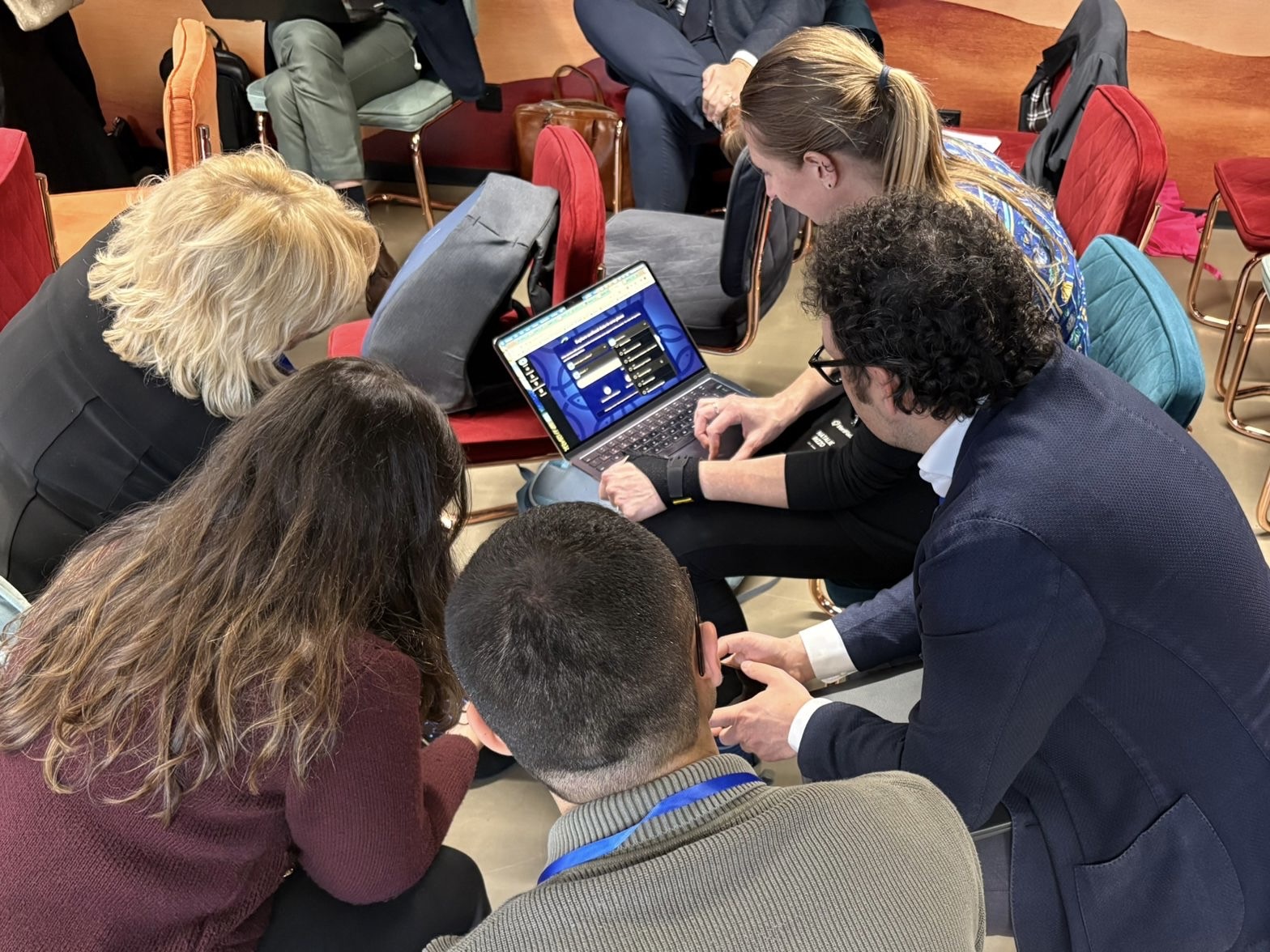
The afternoon moved from plenary discussions to hands-on collaboration through an interactive validation workshop, where participants worked in groups to provide feedback on three key VeriFish outputs.
The first session focused on the VeriFish Web App, with participants assessing its usability and clarity in translating complex sustainability data into accessible information for users. The second session examined the Guidelines for Seafood Value-Chain Actors, discussing their practicality and potential challenges for implementation across the sector. The final session reviewed the project’s Media and Public Engagement Tools, evaluating whether the materials effectively reach non-expert audiences.
The workshop provided valuable stakeholder insights, helping ensure that VeriFish outputs are practical, relevant, and ready for real-world use.
The Role of Trust-IT Services
As VeriFish project coordinator, Trust-IT guided the project’s implementation, coordinating partners, monitoring progress and deliverables, and acting as the main liaison with the European Commission and its implementing agency CINEA. Together with its affiliated entity COMMpla, Trust-IT also contributed to the development of the VeriFish Web App and supported the project’s communication and outreach activities.
Although VeriFish will conclude in April 2026, its results are expected to have a lasting impact.
Stay tuned for updates on the project’s final stage via the VeriFish website: https://verifish.info/