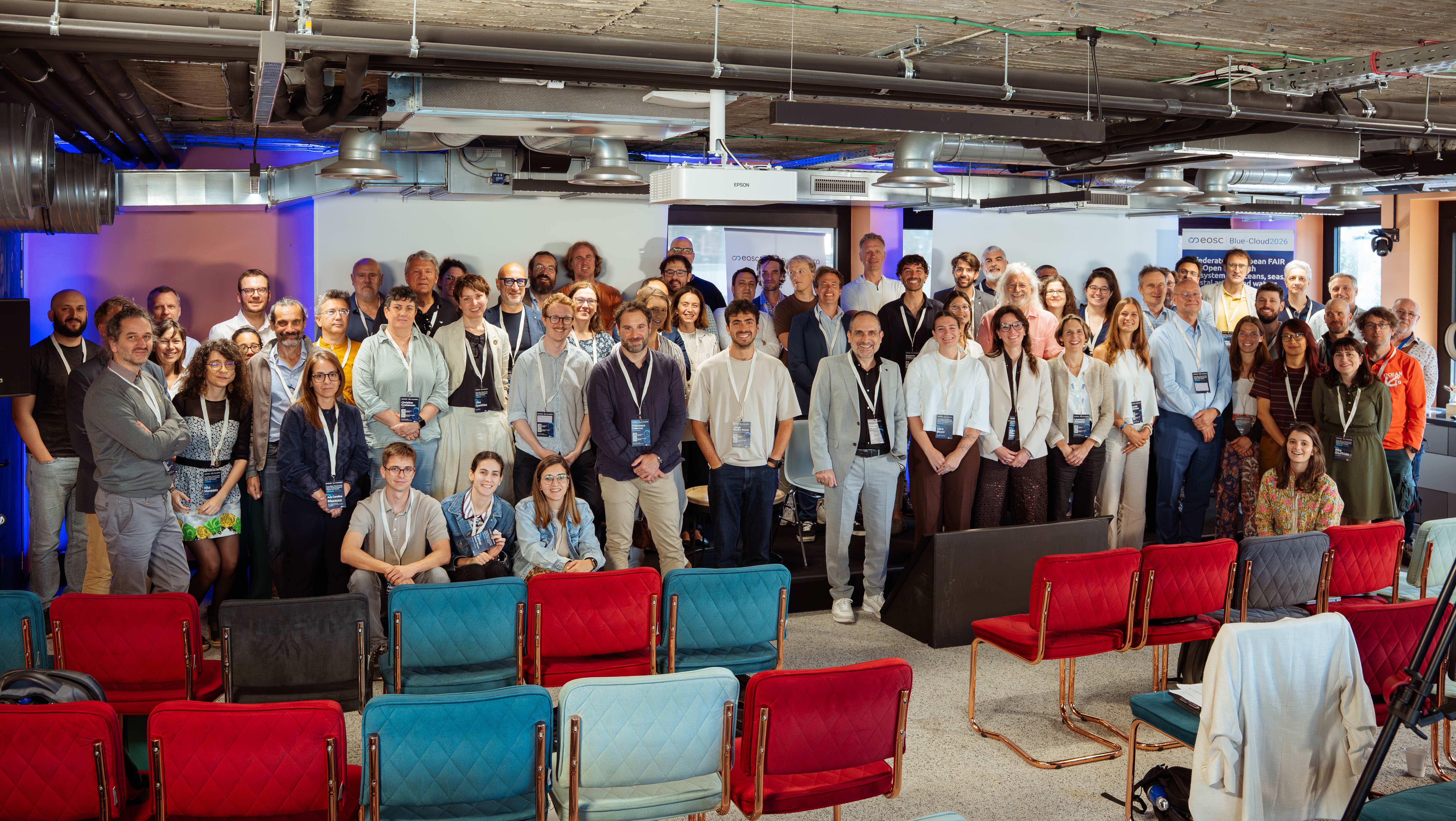
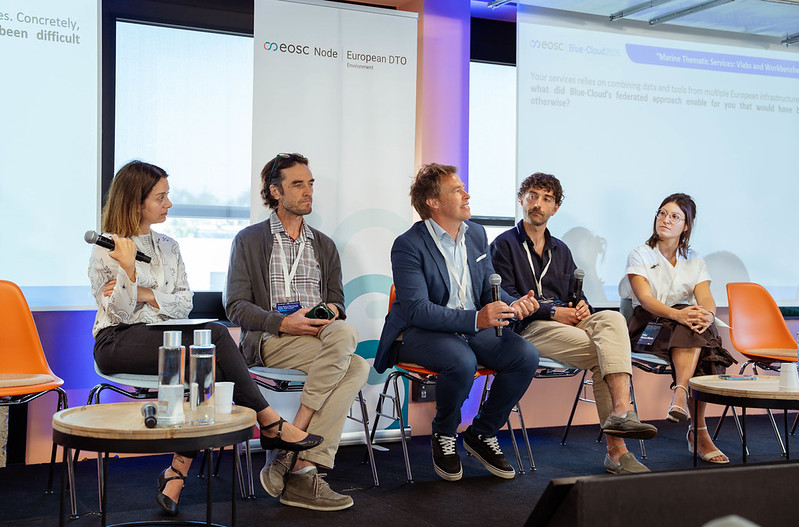
28 May 2026, Brussels — When Blue-Cloud started in 2019, the ambition was clear: build a collaborative, cloud-based environment where European marine scientists could access data, run analytical workflows, and work together across institutional and national boundaries. Seven years later, the Blue-Cloud community gathered in Brussels to mark a milestone that goes well beyond project completion. What began as a pilot has become part of Europe's permanent research infrastructure.
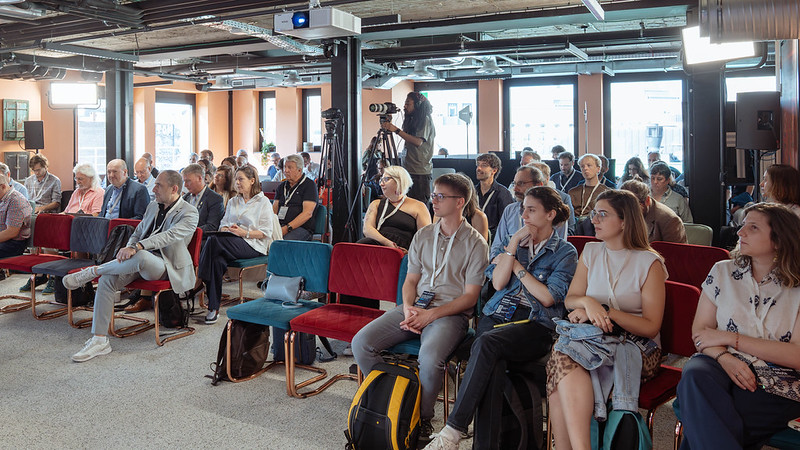
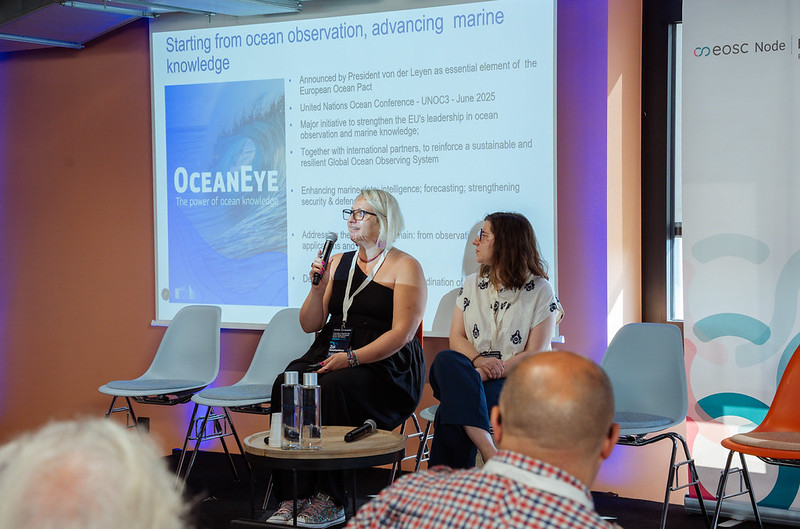
The timing is significant. The European Commission just announced the adoption of OceanEye, the EU's new strategic initiative for global ocean observation leadership, developed jointly by DG MARE and DG RTD as part of the European Ocean Pact. With an ambition to cover over a third of the world's ocean data by 2035 and to secure a significant share of the global ocean technology market, OceanEye sets out a vision that depends precisely on the kind of open, interoperable infrastructure that Blue-Cloud has spent seven years building. The two are not separate stories.
Between 2019 and 2026 the Blue-Cloud Horizon Europe project brought together leading European ocean and marine data and knowledge services, such as those provided by EMODnet and Copernicus Marine, to deliver a Virtual Research Environment (VRE), facilitating collaborative research, offering computing, storage, analytical and generic services, orchestrated with a large variety of data resources for constructing, hosting and operating analytical workflows for specific ocean related applications.
Blue-Cloud 2026 is now recognised as the EOSC Node | European Digital Twin Ocean, a core component of the EOSC Federation dedicated to supporting the marine and water research communities. Building on the foundations of Blue-Cloud 2026 and thanks to renewed funding from Horizon Europe, the Node will enable development of collaborative ocean related research services and applications, their testing through key scientific use cases, and will support the integration of new services as a core component of the EDITO core infrastructure platform of the European Digital Twin of the Ocean.
A Platform That Grew With Its Community
The numbers tell part of the story: close to 3,000 registered users, scientific services spanning ocean physics, eutrophication, ecosystem biodiversity, fisheries, and marine environmental indicators, and a hackathon programme that attracted over 340 participants across 17 multidisciplinary teams. As Pasquale Pagano, who coordinated the platform's technical development, put it, the project proved that federated marine open science is possible, that interoperable workflows scale, and that the scientific community is ready to be onboarded.
Behind those results are three thematic workbenches and five Virtual Labs that translate the platform's infrastructure into usable science. The workbenches tackle data integration at scale: harmonising temperature, salinity, and biogeochemical observations from multiple European data sources into quality-controlled, reproducible data products covering Essential Ocean Variables across physics, eutrophication, and ecosystem domains.
The Virtual Labs go further, offering ready-to-use analytical environments for coastal ocean observations, carbon-plankton dynamics, marine environmental indicators, plankton genomics, and global fisheries, each designed to be accessible to users without specialist programming skills. Taken together, they represent a practical answer to one of marine research's persistent challenges: making diverse, distributed data not just available but genuinely usable.
Where Blue-Cloud Fits
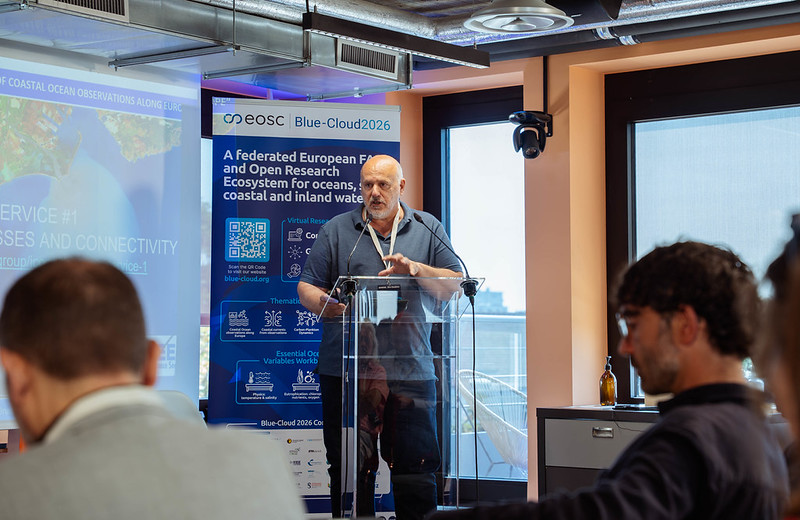
Blue-Cloud did not build in a vacuum. The EOSC Federation, EMODnet, and the European Digital Twin Ocean (EDITO) each represent a different layer of the broader European marine data landscape, and Blue-Cloud's value lies in how it contributes to and interoperates with all of them. Together they form an architecture that Europe has been assembling for years and is now moving into production.
The services built in Blue-Cloud do not depend on the project continuing to exist; they depend on the federation continuing to grow, on open data policies holding, and on research communities being supported to use what has been built. All three of those conditions require active effort, not just technical maintenance.
The Road Ahead
The transition from project to operational node is, in many ways, the harder part. Infrastructure that works in a project setting, with dedicated teams and defined timelines, must now function as a persistent service for a community that extends far beyond the original consortium. That means better onboarding, clearer documentation, and training that is treated as part of the infrastructure itself.
It also means making the case, repeatedly and in concrete terms, for why open marine data matters. Europe's ocean research community has spent years building the argument that environmental knowledge is a public good, that data shared openly produces better science, and that the ocean does not respect national borders. That argument is now being tested in a political climate where the value of open science is not universally taken for granted.
The Blue-Cloud community, with a track record of results and a network of partners spanning the full marine data value chain, is well placed to keep making it.
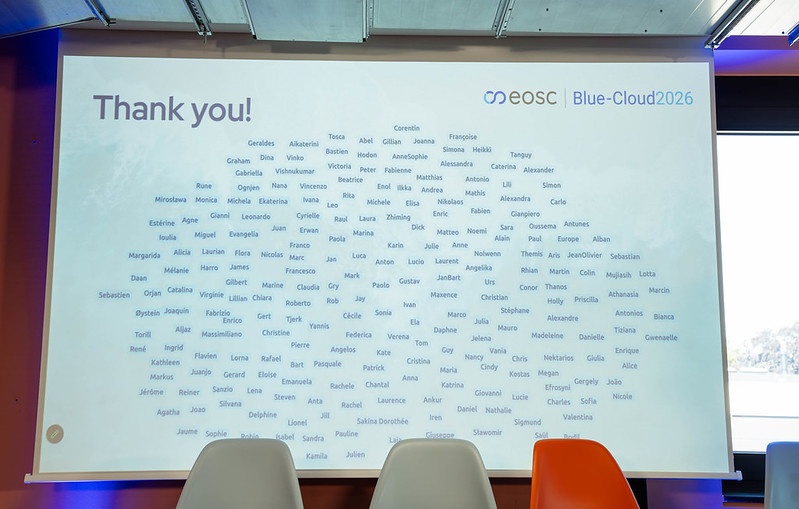
The day closed with a sense of both pride and purpose. Blue-Cloud 2026 has shown what is possible when a community commits to openness, collaboration, and the long view. Its workbenches, virtual laboratories, data products, and community are not endings, but foundations.
As the project transitions into the EOSC Marine node and the European Digital Twin Ocean takes shape, the Blue-Cloud community carries forward a simple but powerful conviction, echoed throughout the day: stronger together.
The Blue-Cloud 2026 project has received funding from the European Union's Horizon Europe research and innovation programme under the GA No 101094227.
To read the presentations and scroll through photos from the final event, please visit: https://blue-cloud.org/events/blue-cloud-eosc-node-digital-twin-ocean-blue-cloud-2026-conference