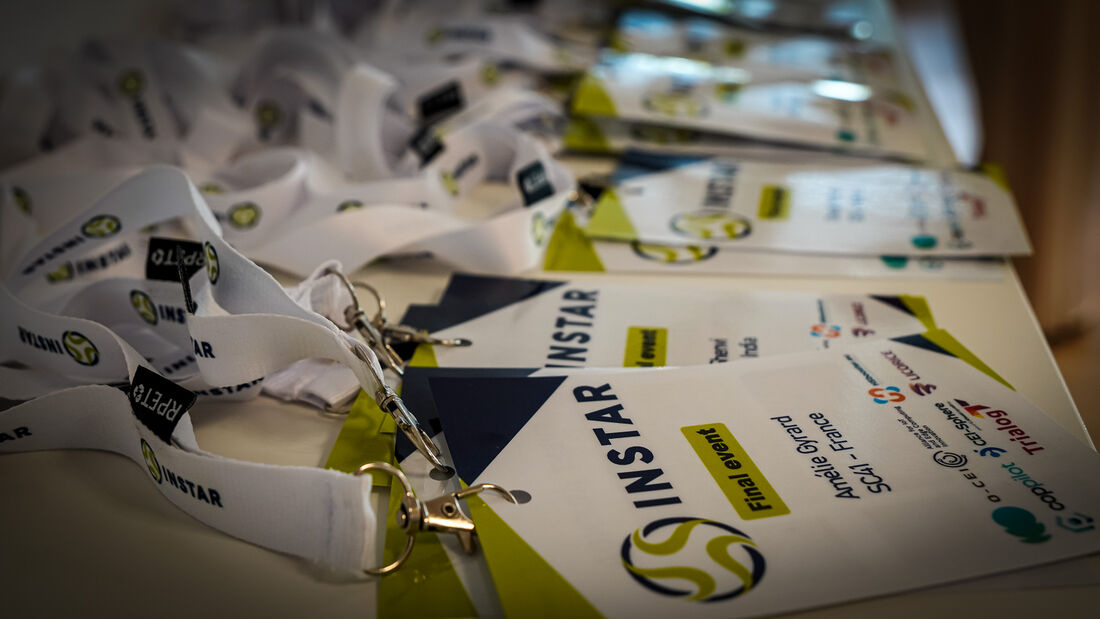
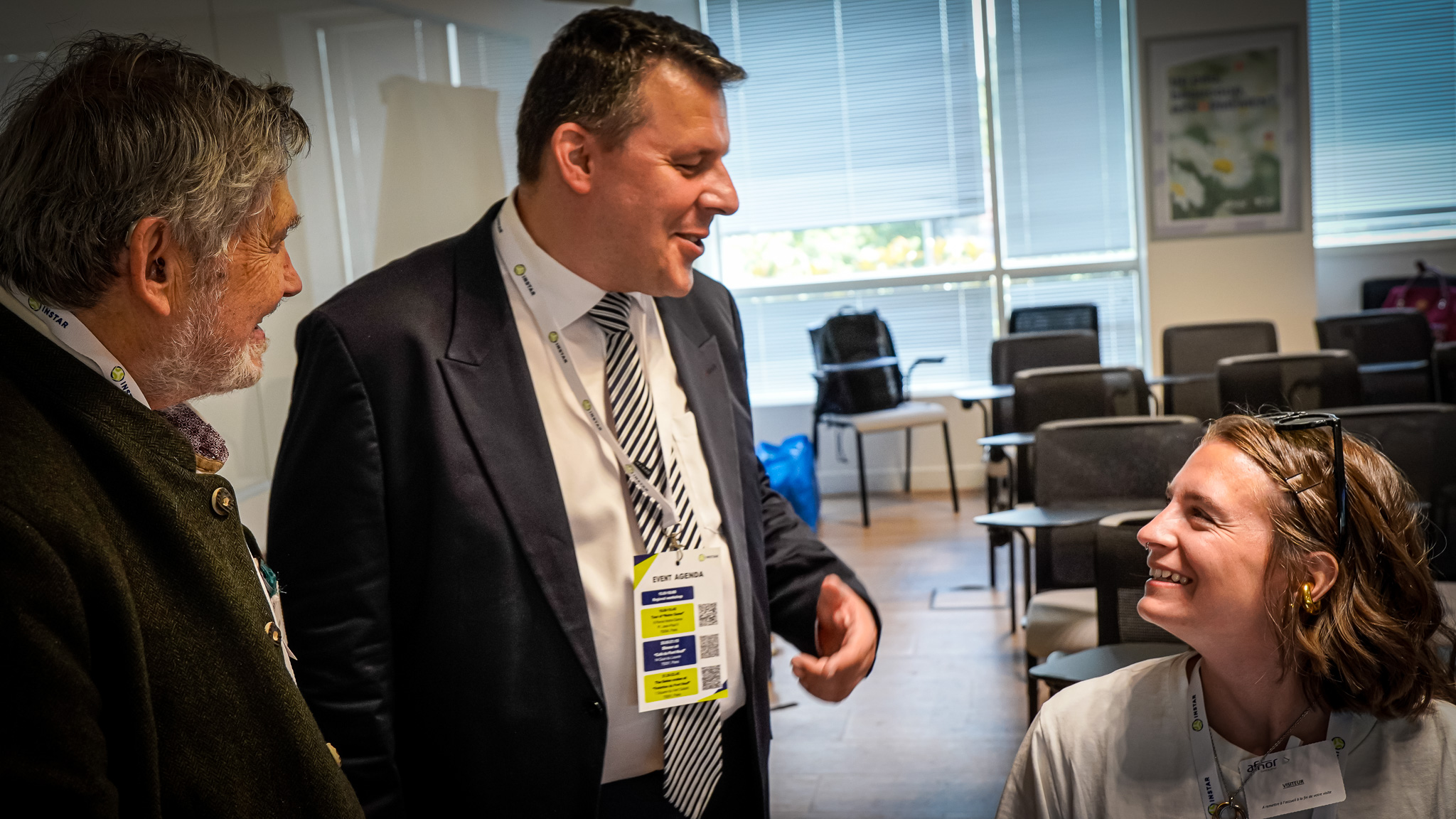
The INSTAR project marked the end of its journey with a Final Event held on 23 June 2026 at AFNOR in Paris, co-located with the ISO/IEC JTC 1/SC 41 Internet of Things and Digital Twin plenary meeting. The choice of venue was fitting: AFNOR is France's national standards body and an active ISO member, and SC 41's secretariat is provided by Korea's KATS agency, reflecting the very international dimension that INSTAR was built to strengthen. INSTAR was the main sponsor of the event.
The afternoon opened with keynote addresses from Yongjin Kim, Chair of ISO/IEC JTC 1/SC 41, and Svet Mihaylov of the European Commission, setting the international and policy context for the sessions that followed.
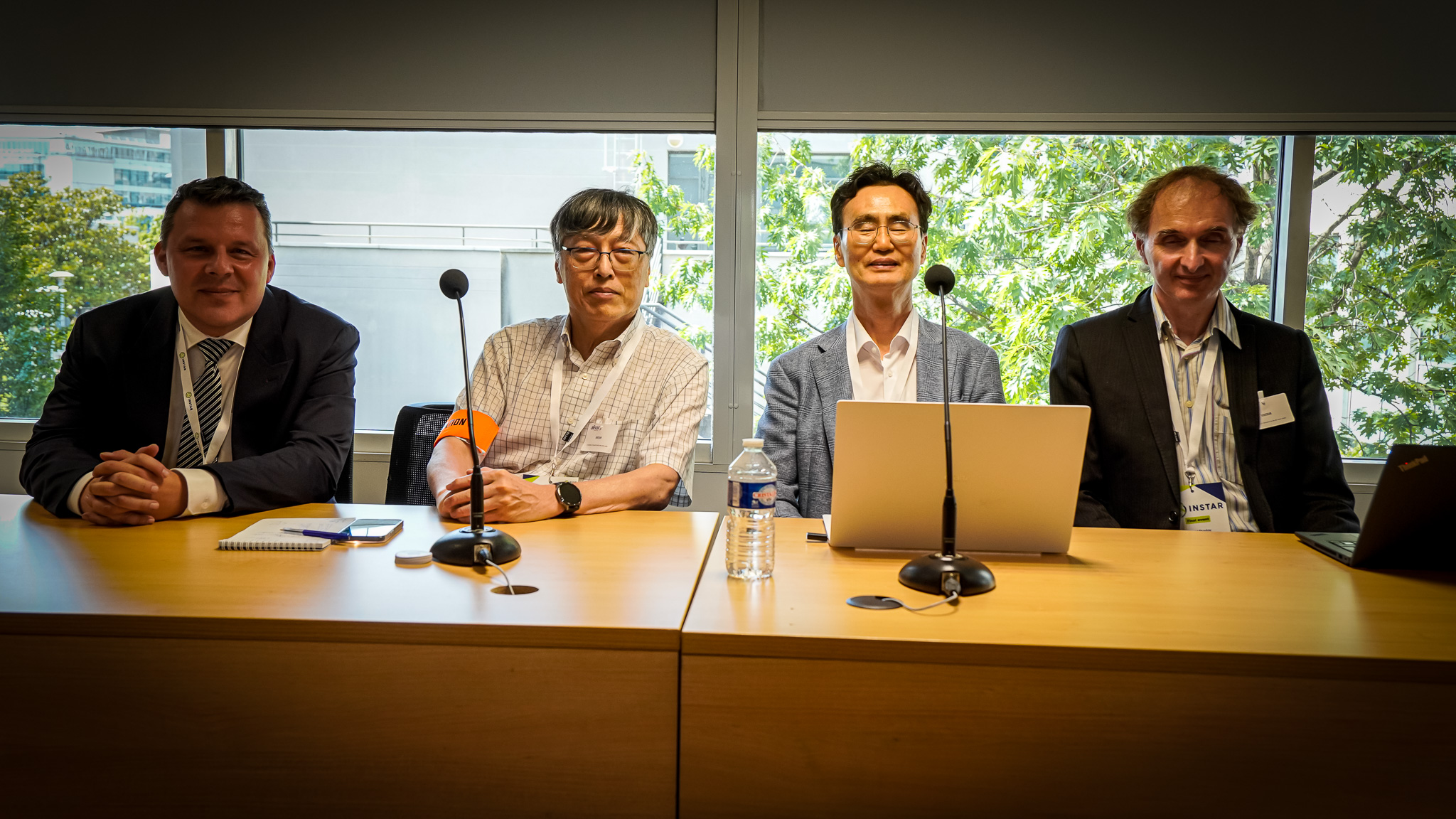
A Rich Programme on Standards for Cloud, Edge, IoT and Beyond
The event hosted a broader programme structured around three thematic blocks, each drawing on the expertise of researchers, industry representatives and EU-funded projects active in the field.
The first block focused on digital twins in France, with contributions from EDF on their interest in and use of digital twin technologies, and from IRT SystemX on their ongoing standardisation activities in the same space.
The second block turned to Cloud/Edge/IoT ecosystems and their impact on standards. Presentations covered the hourglass model developed by the CEI-Sphere initiative – presented by Antonio Kung –, the O-CEI project presented by Ignacio Lacalle from the Universitat Politècnica de València, and the COP-PILOT project, which is exploring standardisation at the intersection of cloud and edge computing.
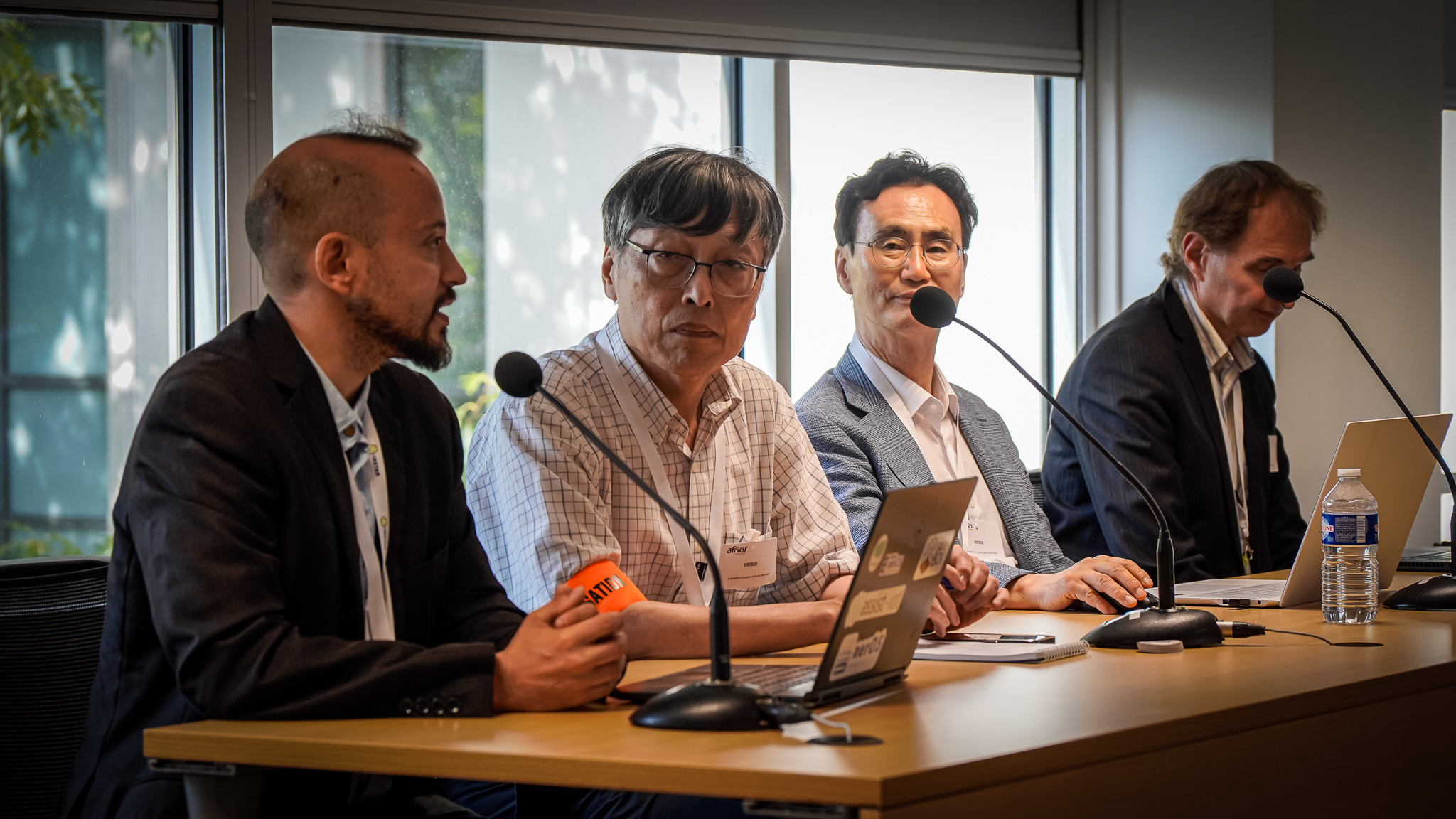
The third block addressed data spaces and digital sovereignty, a topic of growing strategic importance across Europe. Contributions came from the Eclipse Foundation on data space standards and open-source building blocks, and from Diana Jimenez of Trialog presenting the LICORICE project's work on self-sovereign identity and federated privacy libraries for data spaces.
The event closed with a dedicated session on INSTAR cooperation roadmaps, outlining how the partnerships and priorities built over the project's lifetime are being taken forward by European organisations and standardisation bodies.
A Project Built on Partnerships
Launched in January 2024 under the Horizon Europe programme, INSTAR set out to build active partnerships with like-minded organisations across the Asia-Pacific region and North America, develop shared visions for ICT standardisation, and support the implementation of the EU's Digital Partnerships through concrete standards alignment. Six technology domains were at the heart of this work: Artificial Intelligence, Data, Cloud/Edge/IoT, Cybersecurity and e-ID, 5G/6G, and Quantum Technologies.
By the time the project formally closes at the end of June 2026, the numbers tell a clear story:
- 4 Memoranda of Understanding signed with international partners
- 900+ EU and international experts engaged
- 30 standardisation priorities aligned at international level
- 80+ European Task Force members across six domains
- 12 high-level international events organised
What the Task Forces Achieved
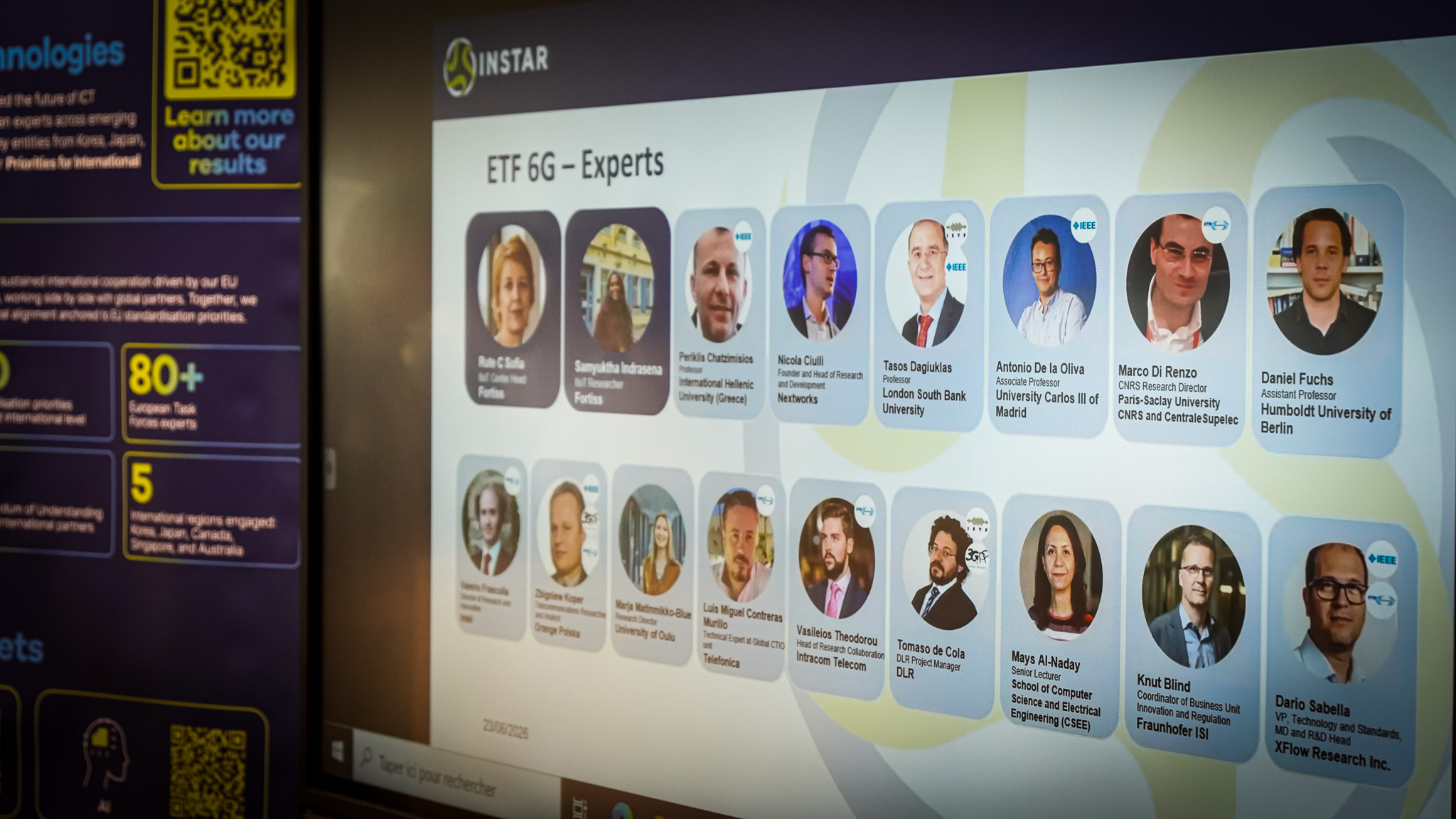
Each of INSTAR's six European Task Forces (ETFs) made tangible progress in aligning European standardisation priorities with partners in Korea, Japan, Canada, Singapore and Australia.
The 6G ETF conducted two alignment workshops with Korea's Telecommunications Technology Association (TTA) and one with JBCE and TTC in Japan, resulting in a joint white paper outlining common visions on networking systems and architectures. These exchanges strengthened collaboration on shared 6G research and standardisation roadmaps.
The AI ETF, bringing together 31 experts combining technical and domain knowledge, produced a third edition of the Priorities for International Collaboration on Standards (PICS) document and identified joint AI standardisation priorities with TTA. The ETF was also invited to participate in the ETSI AI and Data Conference in Sophia Antipolis in February 2026.
The Cybersecurity and e-ID ETF, chaired by Trust-IT Services, convened 22 of Europe's most reputable experts in the field, identifying 22 standardisation priorities and contributing nine of these to the EU-TTA joint PICS. Three alignment workshops were held with JBCE, METI and IPA in Japan to map and compare the EU Cyber Resilience Act with Japan's JC-STAR framework, an effort subsequently taken up by StandICT.eu through a dedicated Technical Working Group.
The Quantum ETF worked across multiple fronts: two alignment workshops with TTA in Korea, a bilateral exchange with Singapore on quantum key distribution and post-quantum cryptography, and a session with Canadian partners connecting EC, CEN/CENELEC JTC22 and ETSI QKD experts. The ETF's work also fed into the High-Level Forum Quantum Work Stream report, and its activities were documented in the Routledge Handbook of Quantum Diplomacy and Geopolitics.

Looking Beyond June 2026
One of INSTAR's defining commitments has been to ensure its work continues after the project ends. A detailed sustainability plan has been prepared, and the project's key assets are already being transferred to relevant European organisations:
- Established networks of European standards experts across all six technology areas
- Formal cooperation channels with leading organisations in Korea, Japan, Canada, Singapore and Australia
- Methods and templates for organising Priorities for International Collaboration on Standards (PICS)
- Agreed PICS with international partners, which can serve as input into future ICT Rolling Plans
Handovers have already been signed with AIOTI, EOS and CONASENSE. Discussions are ongoing with BDVA, 6G IA, QuIC and ADRA. The Cybersecurity and e-ID expert network will continue its work within the EOS Cyber-Physical Security Working Group; the Quantum ETF's activities will be taken forward within the QuIC Working Group on Standards.
A Foundation for the Future
The INSTAR Final Event was not a farewell so much as a handover. The project demonstrated that structured international cooperation on standardisation is both achievable and productive, and that the networks and methods built over two and a half years have real and lasting value. With its assets now in the hands of organisations positioned to carry them forward, INSTAR's contribution to European ICT standardisation will continue well beyond its funding period.
To learn more about project’s results, head over to: https://instarstandards.org/
For more photos from the day, check out our Flickr: https://flic.kr/s/aHBqjCXAEp
INSTAR (International Standardisation cooperation) was funded by the European Union under the Horizon Europe programme (GA #101135877). Trust-IT Services contributed to the project as a partner, with responsibility spanning communications, task force coordination, and international cooperation activities.