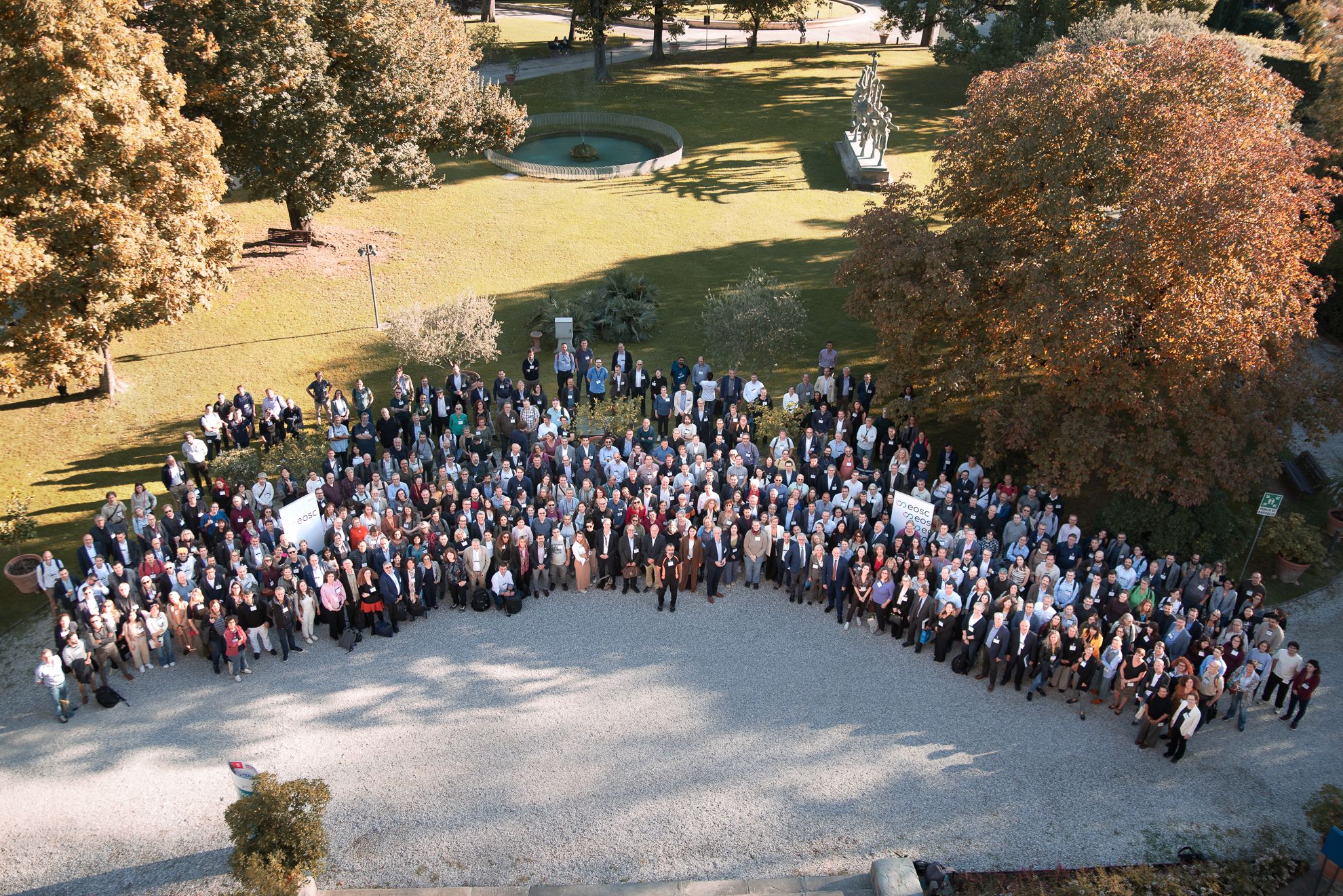
Florence, October 2026. The timing could hardly have been better. The EOSC Federation entered production just days before the EOSC Symposium 2026 opened in Florence, and more than 500 people from 35 countries came together to celebrate a Federation that now counts 14 operational Nodes and 124 services. Trust-IT Services was there with several of the Horizon Europe projects it works on, across three booths, a number of talks and sessions, and a newly signed Memorandum of Understanding.
What was on the agenda?
Over three days, policy makers, research infrastructures, service providers and researchers kept coming back to one question: how can the Federation become something researchers actually rely on?
Day one set the political tone. In video messages, Italian Minister Anna Maria Bernini spoke about the importance of trusted, interoperable data for AI, and European Commissioner Ekaterina Zaharieva described EOSC as a strategic asset for Europe's competitiveness. Gianluigi Consoli, Director General for Internationalisation at Italy's Ministry of University and Research, put it simply: EOSC is not here to replace research infrastructures, but to connect them. Keynote speaker Manuel Heitor encouraged the community to think bigger and to bring demand for data together around urgent societal challenges. Celebrations aside, much of the conversation turned to funding, and in particular to the case for a dedicated EOSC Partnership in FP10.
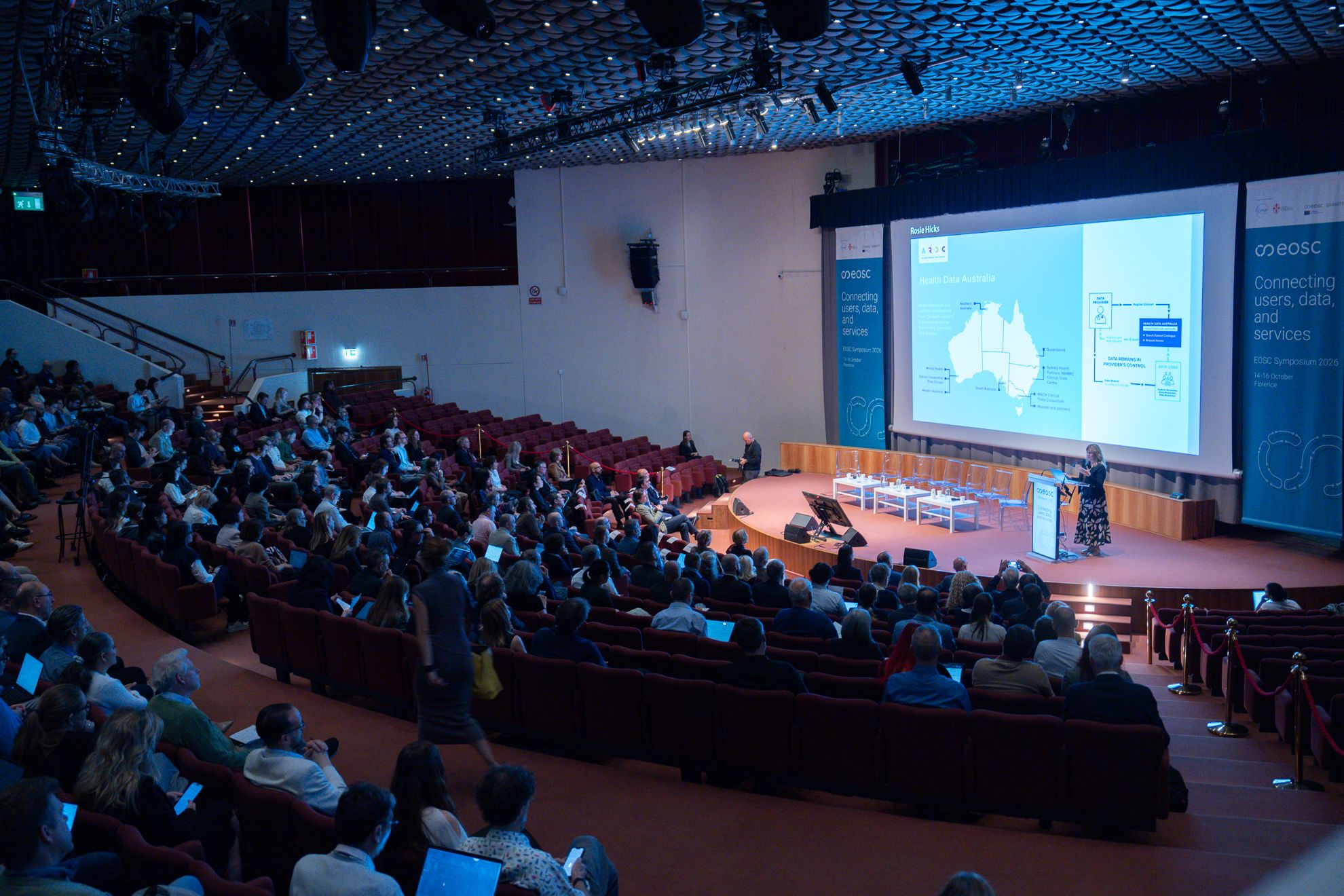
On day two, attention moved from what has been achieved to what it will take to make the Federation indispensable. Rosie Hicks, CEO of the Australian Research Data Commons, shared Australia's experience and made a convincing case for turning short-term projects into long-term products, built together with research communities and planned with the same long view usually reserved for physical infrastructure. The parallel tracks then got into the details: links with EuroHPC, Destination Earth and the European Data Spaces; user experience, trustworthiness, data sovereignty and automated FAIRification; and the practical lessons coming from Nodes already in production, including how to keep shared services running over time.
The last day was all about AI. Mercè Crosas, President of CODATA, argued that both research data and research communities need to get ready for AI, instead of simply becoming its users. A lively panel followed on Europe's place in the global AI race and on how to handle machine access to research data.
In the closing plenary, speakers looked ahead to the Federation's next phase: easier onboarding, sustainable services, governance led by the Nodes and a more distributed architecture. The coordinators of the second wave of EOSC Nodes were welcomed on stage, and the Symposium ended with an invitation to meet again next year in Krakow, Poland.
A new MoU to align EOSC Federation projects
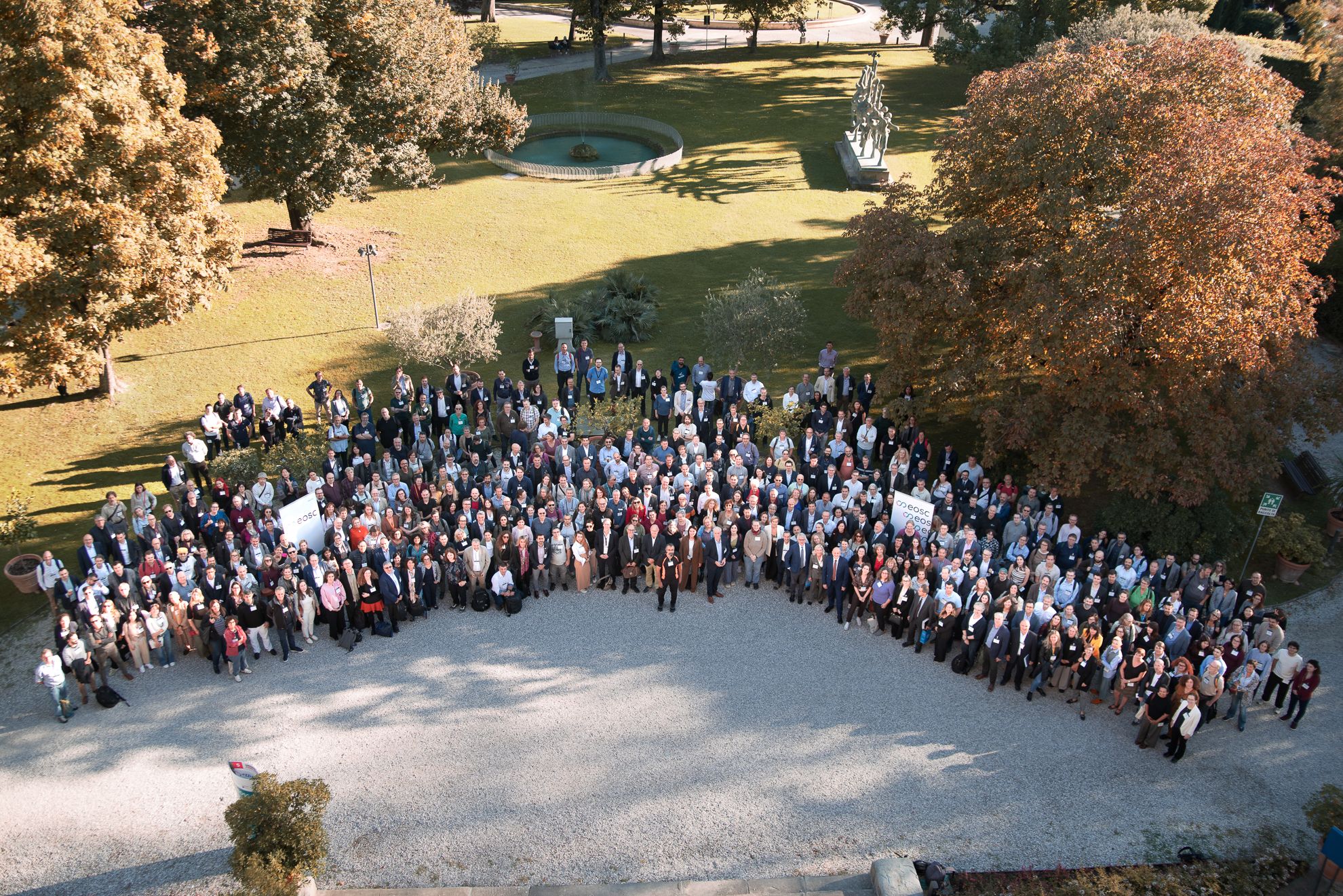
On 15 October, alongside the Symposium programme, the EOSC Association and four Horizon Europe projects signed a Memorandum of Understanding to strengthen their collaboration and support the development of the EOSC Federation. The four projects, EOSC4ALL, EOSC-CONNECT, EOSC-Marine and EOSC Mesh, are funded under the HORIZON-INFRA-2025-01 call and together receive around €33.5 million in EU funding. Trust-IT Services is a consortium partner in each of them.
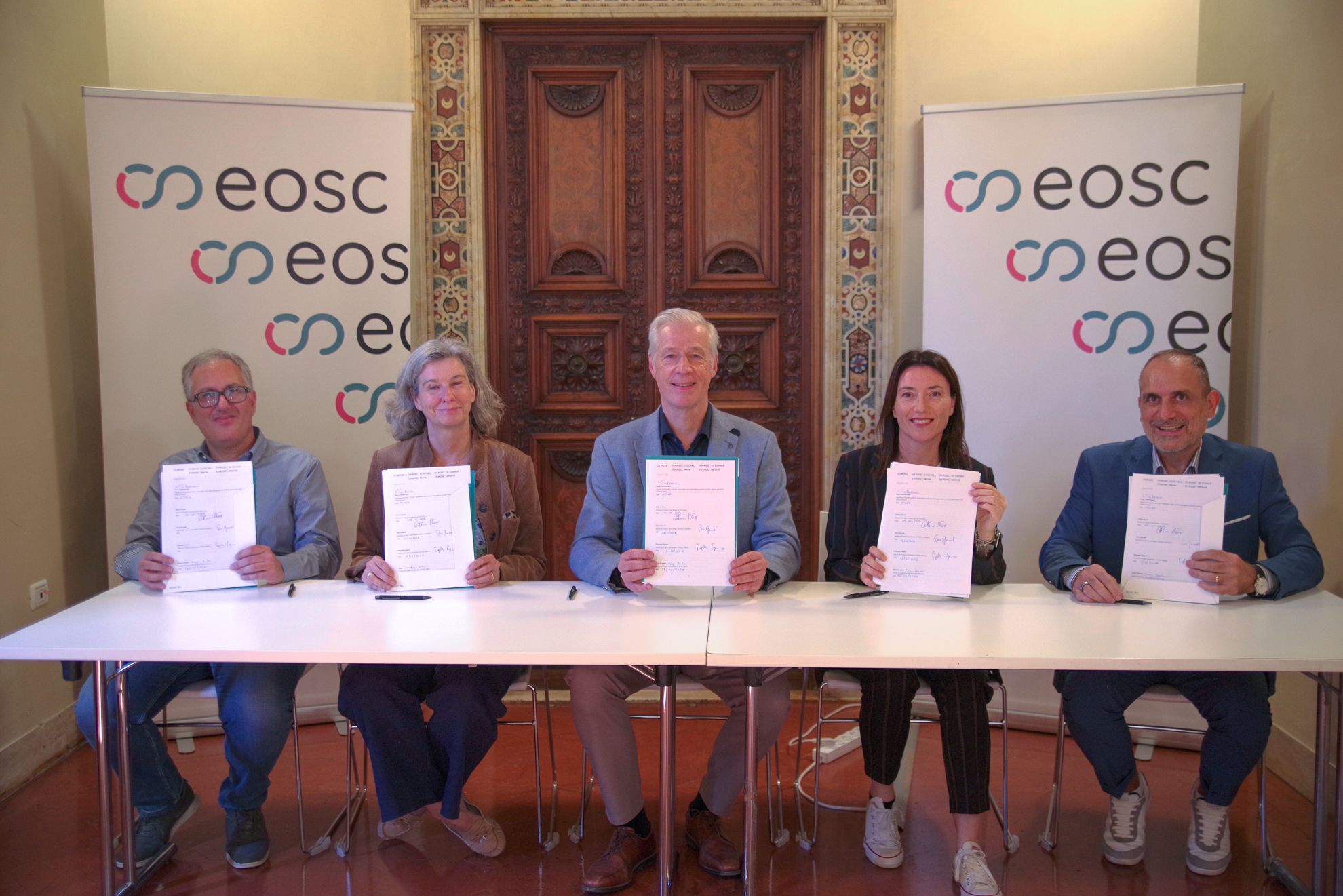
Each project brings a different piece to a common goal: making it easier for researchers across Europe to find and use the data, tools and services they need, wherever these are hosted. Their work is complementary, from lowering the technical barriers to joining the Federation and connecting national research infrastructures, to making Nodes interoperable with one another. EOSC-Marine, for its part, supports the operationalisation of the EOSC Node European Digital Twin Ocean by integrating marine research resources.
The collaboration covers four connected areas. On architecture, the projects will align interfaces, standards and operational practices where it makes sense, including metadata, APIs, authentication and data access, and will contribute to a roadmap towards a more distributed Federation. On governance, they will work through the EOSC Federation Build-up Group, the Federation's interim governance structure, and submit the roadmap to the EOSC Node Coordinators Committee for endorsement. On engagement, they will compare their outreach to Nodes, countries and communities, identify overlaps and agree on a joint plan, so that it is easier for stakeholders to get involved. On sustainability, they will share their approaches, key exploitable results and best practices, following the principle "as open as possible, as closed as necessary", with a yearly summary shared with the Build-up Group.
The signatories will draft a joint work plan by the end of 2026, with implementation expected to start in early 2027. The MoU will remain in place until the last of the projects ends, currently planned for 31 August 2029. For EOSC-Marine, the results of this collaboration will also feed into a White Paper with recommendations on onboarding and enrolment in the Federation, and into the project's Governance & Sustainability Plan.
At the booths and on stage
In the exhibition area, OSCARS shared a booth with the EVERSE project. Visitors could learn about the 70 projects funded through the two OSCARS Open Calls for Open Science projects and services, from the key figures of the calls to the challenges the projects tackle and the results achieved so far. People from the OSCARS consortium, the Science Clusters and the funded projects also spoke in several sessions of the main programme. Speakers from the OSCARS community included Oliver Knodel (HZDR, mTeSS-X), Phil Reed (University of Manchester, mTeSS-X), Anca Hienola (ENVRI Science Cluster), Sylvia Le Dévédec (Universiteit Leiden, BIO-CODES), Franciska de Jong (CLARIN ERIC, SSHOC Science Cluster) and Marco Molinaro (INAF, Astro-CC). They contributed to sessions on capacity building for AI, automating data FAIRification and the usage of EOSC Nodes.
The session on the usage of EOSC Nodes was co-chaired by Giovanni Guerrieri (CERN, ESCAPE Science Cluster) and Jonathan Tedds (ELIXIR, LS-RI Science Cluster), while the emerging EOSC Federation User Forum was chaired by Andy Götz (PaNOSC Science Cluster) and Sally Chambers (DARIAH ERIC, SSHOC Science Cluster).
EUDAT had its own booth, this time as one of the EOSC Nodes now in production, alongside the EOSC Node European Digital Twin Ocean and others. On day two, Alessandro Petrocelli, CTO of Trust-IT Services & COMMpla, took the stage to talk about the EOSC Node EUDAT: the challenges along the way and what it brings to the Federation.
The EOSC Node European Digital Twin Ocean, supported by the EOSC Marine project - which kicked off operations on the Monday prior to the Symposium, was also in the exhibition area. Pasquale Pagano (CNR), coordinator of both the Node and the project, spoke on several occasions during the programme. On day two, he explained how the Node is putting the EOSC Federation into practice, covering technical, governance and legal aspects, engagement with providers and users, and sustainability. He also joined the closing plenary, where he summed up the scientific ambition of the Federation as "science without borders", and signed the MoU on behalf of EOSC-Marine.
FIDELIS and EDEN shared a booth as well. FIDELIS also took part in the session "Data federation, trustworthiness and sovereignty" on Thursday 15 October, co-chaired by Mari Kleemola (FSD, Tampere University). The discussion looked at how data federation works in practice and at what it takes to bring trustworthy repositories into the EOSC Federation, which is exactly what the FIDELIS Network is working on.
With the Federation now in production, the conversations in Florence made clear that the next step is to show its value in researchers' everyday work. Through its role in these projects, Trust-IT Services will keep contributing to that effort in the year ahead, from supporting the Nodes already running to helping the projects work more closely together.
Learn more about the projects involved
EOSC Marine & the EOSC Node European Digital Twin Ocean: https://eosc-dto.eu/
EUDAT: https://eudat.eu/
EOSC EDEN-FIDELIS: https://eden-fidelis.eu/
EOSC-CONNECT: https://eosc-connect.eu/
EOSC Mesh: https://eosc.eu/horizon-europe-projects/eosc-mesh
EOSC4ALL: https://eosc.eu/horizon-europe-projects/eosc4all
OSCARS: https://oscars-project.eu/