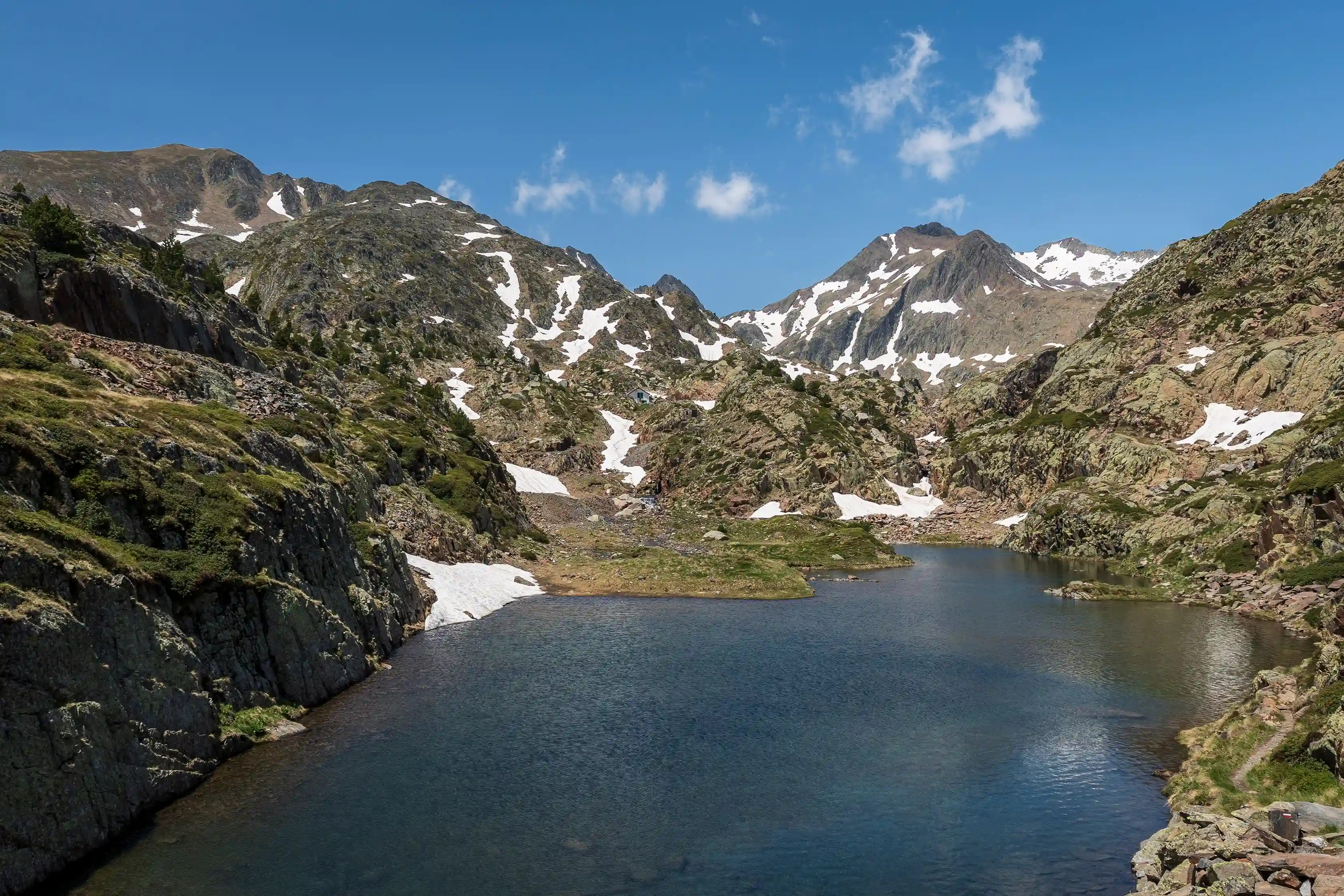
Lakes cover nearly 4% of our planet's surface and hold 90% of all unfrozen fresh water. They sustain biodiversity, regulate our climate, and feed billions of people. Yet, they are quietly disappearing, not all at once, but species by species, ecosystem by ecosystem.
Today, on the second World Lake Day, it is worth asking: what is actually threatening them? And what can we do about it?
The problem starts far from the shore
A major and often overlooked cause is nutrient pollution. When too much nitrogen and phosphorus ends up in rivers and lakes (from fertilisers, animal manure, and aquaculture waste), it throws aquatic ecosystems off balance. Algal blooms take over, oxygen levels drop, and the plants and animals that depend on clean water simply cannot survive.
The numbers are disheartening: freshwater species have declined by 85% in 50 years, and if nothing changes, lake pollution could more than double by 2050. But across Europe, researchers and innovators are working to turn the tide.
GREENHOOD: addressing nutrient pollution at the source
GREENHOOD is a Horizon Europe-funded project developing and testing innovative approaches to nutrient recycling across four European demo-regions, each within a sensitive water catchment facing its own nutrient pressures.
In the Archipelago Sea Basin in Finland, agricultural runoff has contributed to nutrient loading in one of Europe's most ecologically fragile marine areas.
In the Trondheim Fjord Basin in Norway, a growing aquaculture industry generates large quantities of fish sludge, contributing to phosphorus accumulation in coastal waters.
In the Ebro River Basin in Spain, intensive agriculture creates persistent nutrient imbalances that spill over into rivers and wetlands well beyond the region's boundaries.
In the Rhine, Meuse & Scheldt Basin in Belgium and the Netherlands, Europe's most livestock-dense region faces some of the continent's most acute nutrient pressures on its soils and waterways.
GREENHOOD's approach is to intervene before these nutrients reach water bodies, recovering them from manure, fish sludge, and organic waste, and transforming them into high-quality bio-based fertilisers that can replace mineral inputs. Closing the nutrient loop is a direct contribution to reducing pressure on the freshwater and coastal systems that sustain ecosystems and communities across these regions.
Research within the reach of all: the role of Communication and Stakeholder engagement
Science alone doesn't protect lakes. People do, when they have the right information, the right frameworks, and the right conversations. This is where Trust-IT Services contributes to GREENHOOD. As a key partner in the project, Trust-IT leads the activities for the co-definition of Integrated Nutrient Management Action Plans (INMAPs), working with regional actors across all four demo-regions to co-design nutrient management strategies and multi-actor transition pathways grounded in local realities. Trust-IT also leads the project's dissemination and communication activities, making complex environmental science accessible and connecting the people who need to act on it.
In practice, this means creating the spaces where change can actually happen. The GREENHOOD Governance Labs are one of those spaces: participatory sessions bringing together policymakers, farmers, researchers, and industry representatives to co-create governance roadmaps for sustainable nutrient management. Three have already taken place since May 2026, with a fourth coming up on 17 September in Loimaa, Finland.
And this is precisely why protecting lakes and freshwater systems is not only a matter of better technologies. The right people need to be at the table, and they need to understand the problem, trust the solutions, and work together to implement them. Building that shared understanding is what communication and stakeholder engagement are for.
Looking ahead
On this second World Lake Day, let's remember that what happens on a field in Finland, a fish farm in Norway, or an irrigated plain in Spain doesn't stay there. It flows into rivers, into lakes, into the ecosystems we all depend on. Addressing it requires action across the entire nutrient cycle, from source to water body.
GREENHOOD is part of that effort, and so is the work of making it visible, understood, and scalable.